
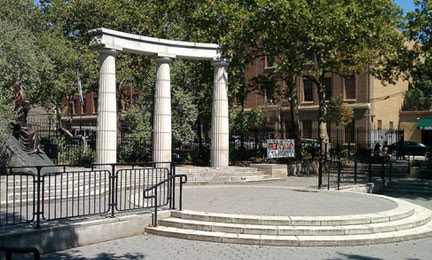
ANCIENT PSYCHE: A BILINGUAL BLOG (ENGLISH AND GREEK) ON PSYCHOPEDAGOGY-PSYCHOHISTORY-PSYCHOARCHAEOLOGY-ARCHAEOTHERAPEUTICS-ARCHAEONATUROPATHY-ARCHAEOCOUNSELING WITH A CLASSICAL, ΒΥΖΑΝΤΙΝΕ/ORTHDOX CHRISTIAN, MEDITERRANEAN, HELLENIC, HELLENIC-AMERICAN, AND AMERICAN EMPHASIS Photo: Athens Square, Astoria, NY (USA)
Friday, September 29, 2017
Saturday, September 23, 2017
International Museum Day Celebrated At Epirus Anagenesis Society Heritage Museum By Catherine Tsounis
2013-05-29 / Features
 Print
Print.jpg "The Society of Epirotes “Anagenesis” and the Ladies’ Auxiliary “Souliotisses.") The Society of Epirotes “Anagenesis” and the Ladies’ Auxiliary “Souliotisses.
The Society of Epirotes “Anagenesis” and the Ladies’ Auxiliary “Souliotisses.
The International Council of Museums (ICOM) celebrated International Museum Day on May 18th, 2013. Museums display and protect the “Memory of the World”, sharing a common vision of safeguarding heritage for the benefit of society. “We celebrated International Museum Day on Saturday, May 18 by having the community visit the Heritage
.jpg "Banner tracing origin to 1934.") Banner tracing origin to 1934.Museum of Epirus between 11am and 5pm,” explained Chrisoula Zikopoulos, Director of the Heritage Museum of Epirus. “Founded in 2003 under the auspices of the Society of Epirotes “Anagenesis” and the Ladies’ Auxiliary “Souliotisses,” the Heritage Museum of Epirus is the only functioning Greek Heritage Museum in the New York metropolitan area. We encourage all to explore the museum’s rich collection of loom-woven textiles, traditional clothing, hand-crafted jewelry, agricultural and household tools and photographs.”
Banner tracing origin to 1934.Museum of Epirus between 11am and 5pm,” explained Chrisoula Zikopoulos, Director of the Heritage Museum of Epirus. “Founded in 2003 under the auspices of the Society of Epirotes “Anagenesis” and the Ladies’ Auxiliary “Souliotisses,” the Heritage Museum of Epirus is the only functioning Greek Heritage Museum in the New York metropolitan area. We encourage all to explore the museum’s rich collection of loom-woven textiles, traditional clothing, hand-crafted jewelry, agricultural and household tools and photographs.”.jpg "Leaders, diplomat, professors from the University of Yiannina and Museum donors.") Leaders, diplomat, professors from the University of Yiannina and Museum donors. Director Zikopoulos said “the museum is located in the heart of the Greek community of Astoria, Queens. It is dedicated to preserving the culture and cultural traditions of Epirus, Greece. We are making Hellenic heritage accessible in ways that enrich present and future generations through exhibitions and public programs. I took over as Director two months ago. We must open the museum to the public. This is our gift to our children. I pledge to bring our children to our pride, our treasure, the Heritage Museum of Epirus. No one has what we have. We recently celebrated the one hundred year
Leaders, diplomat, professors from the University of Yiannina and Museum donors. Director Zikopoulos said “the museum is located in the heart of the Greek community of Astoria, Queens. It is dedicated to preserving the culture and cultural traditions of Epirus, Greece. We are making Hellenic heritage accessible in ways that enrich present and future generations through exhibitions and public programs. I took over as Director two months ago. We must open the museum to the public. This is our gift to our children. I pledge to bring our children to our pride, our treasure, the Heritage Museum of Epirus. No one has what we have. We recently celebrated the one hundred year .jpg "Costumes of Epirotan women.") Costumes of Epirotan women.anniversary of the liberation of Yiannina in 1913.” The museum is located on the third floor of the Epirotan Cultural Center at 2514 Broadway (between. 29th St. & Crescent St.) in Astoria. It is conveniently located 3 blocks from the Broadway stop on the N and Q subway lines.
Costumes of Epirotan women.anniversary of the liberation of Yiannina in 1913.” The museum is located on the third floor of the Epirotan Cultural Center at 2514 Broadway (between. 29th St. & Crescent St.) in Astoria. It is conveniently located 3 blocks from the Broadway stop on the N and Q subway lines. Museum Curator Anna Konstatatos (center) described the wedding outfits to writer (left) and Director Zikopoulos (right). Mr. Christos Kosovitsas is the Museum’s founder and Director Emeritus. In his welcome address, he said “the idea of a museum was born at a general meeting. We have a tradition that Odysseus had come to the Oracle of Dodoni to take prophecies regarding his return to Ithaca. We were helped by other organizations to make our dream a reality.”
The shrine of Dodona was regarded as the oldest Hellenic oracle, possibly dating to.preview.jpg "Traditional Epirotan livingroom.") Traditional Epirotan livingroom. the second millennium BCE according to Herodotus. Situated in a remote region away from the main Greek poleis, it was considered second only to the oracle of Delphi in prestige. Priestesses and priests in the sacred grove interpreted the rustling of the oak (or beech) leaves to determine the correct actions to be taken. Aristotle considered the region around Dodona to have been part of Hellas and the region where the Hellenes originated.[2] The oracle was first under the control of the Thesprotians before it passed into the hands of the Molossians.[3] It remained an important religious sanctuary until the rise of Christianity during the Late Roman era. (http://en.wikipedia.org/wiki/Dodona).
Traditional Epirotan livingroom. the second millennium BCE according to Herodotus. Situated in a remote region away from the main Greek poleis, it was considered second only to the oracle of Delphi in prestige. Priestesses and priests in the sacred grove interpreted the rustling of the oak (or beech) leaves to determine the correct actions to be taken. Aristotle considered the region around Dodona to have been part of Hellas and the region where the Hellenes originated.[2] The oracle was first under the control of the Thesprotians before it passed into the hands of the Molossians.[3] It remained an important religious sanctuary until the rise of Christianity during the Late Roman era. (http://en.wikipedia.org/wiki/Dodona).
.jpg "Traditional Epirotan livingroom.") Traditional Epirotan livingroom. the second millennium BCE according to Herodotus. Situated in a remote region away from the main Greek poleis, it was considered second only to the oracle of Delphi in prestige. Priestesses and priests in the sacred grove interpreted the rustling of the oak (or beech) leaves to determine the correct actions to be taken. Aristotle considered the region around Dodona to have been part of Hellas and the region where the Hellenes originated.[2] The oracle was first under the control of the Thesprotians before it passed into the hands of the Molossians.[3] It remained an important religious sanctuary until the rise of Christianity during the Late Roman era. (http://en.wikipedia.org/wiki/Dodona).
Traditional Epirotan livingroom. the second millennium BCE according to Herodotus. Situated in a remote region away from the main Greek poleis, it was considered second only to the oracle of Delphi in prestige. Priestesses and priests in the sacred grove interpreted the rustling of the oak (or beech) leaves to determine the correct actions to be taken. Aristotle considered the region around Dodona to have been part of Hellas and the region where the Hellenes originated.[2] The oracle was first under the control of the Thesprotians before it passed into the hands of the Molossians.[3] It remained an important religious sanctuary until the rise of Christianity during the Late Roman era. (http://en.wikipedia.org/wiki/Dodona). Exhibit of agrarian life. Prominent persons attended including : Evangelos Kyriakopoulos of the Greek Consulate; Samouel Zisis, Greece Trade Attaché, Chrysostomos Dimou, President and Chairman of World Council Epirotes; Efthemios Pappas, President of Anagenesis; Persey Kouloumbinis; Eva Kantlis; International Artist Marianthi Raptis. George Lolis, Treasurer of the Society of Epirotes “Anagenesis”, said “we are Epirotans who are proud of our heritage. We want to show the next generation where we come from and our ethos.” Mr. Paul Kotrotsios, publisher of Hellenic News of America and Hermes International Expo believes “it is a great honor to be at this celebration. We are encouraging all youth, groups, organizations and Phil-Hellenes to come and see our unique collection of Epirus. Today, we have the donors of the museum’s exhibits. I am here to help make the Epirus Museum a meeting place for Hellenic culture. The first Greeks, the ‘Elli’, came from Epirus.” According to the ancient
  "The Flight from Parga”, courtesy of former Benaki Museum librarian Pitsa Tsakonas.Greek historian Strabo, Epirus was inhabited by
inhabited by 14 Greek-speaking tribes...." href="http://www.smilitimetravels.com/extented.html"fourteen Greek-speaking tribes. They expanded out of this area into mainland Greece and the Peloponesse around the 12th century B.C.
"The Flight from Parga”, courtesy of former Benaki Museum librarian Pitsa Tsakonas.Greek historian Strabo, Epirus was inhabited by
inhabited by 14 Greek-speaking tribes...." href="http://www.smilitimetravels.com/extented.html"fourteen Greek-speaking tribes. They expanded out of this area into mainland Greece and the Peloponesse around the 12th century B.C.
Mr. Kotrotsios told me that my name, Tsounis, is a two syllabus name, characteristic of Epirotan family. It is probably true since the first Greeks came from Epirus. The Encyclopedia Britannica states “In the Neolithic period Epirus was populated by seafarers along the coast and by shepherds and hunters from the southwestern Balkans who brought with them the Greek language. These people buried their leaders in large mounds containing shaft graves. Similar burial chambers were subsequently used by the Mycenaean civilization, suggesting that the founders of Mycenae may have come from Epirus and central Albania,” (http://www.britannica.com/EBchecked/topic/190156/Epirus).
Community leaders who are primary sources were present. “Under my leadership we bought the building that was one floor,” recalled President of Anagenesis Efthemios Pappas. “In 1988, we completed the second floor that houses the Epirus Museum. All members and friends lent the Syllogos (Society of Epirotes “Anagenesis”) five thousand each. We did not have to take a five hundred thousand dollar mortgage because of everyone’s generosity. We repaid all donors. We had two wonderful tenants who helped us cover our expenses, motivating us to create our Museum. We invite all to come and call us at 718 274-3753 and email at anagenesis@verizon.net.
Chrysostomos Dimou, President and Chairman of the World Council of Epirotes Abroad, said “we are the people who make the first steps. We want to give back to our Patritha (country). Our youth must get involved. This museum is important to us. Our traditions are kept alive. We walk jointly with the University of Yiannina. Epirus has been hit hard by the economic crisis in Greece.” Mrs. Eva Kantlis, the backbone of the Ladies’ Auxiliary “Souliotisses,” believes “Epirotes are straight, trust worthy. They have logic and honesty of the highest degree.” Mr. Takis Zikopoulos, my teacher from St. Demetrios Parochial School in Astoria and his late brothers epitomize these qualities.
Eleni Lolis is a Yianniotisa from Yiannina. “I have been here from 1968,” she recalled. “As President of the Ladies’ Auxiliary ‘Souliotisses’, we helped organize the Museum. It is our joy to show our heritage. We invite Epirotans and friends to come.” Their stand at Souli was a true tale of mythic proportions. Revolution was raging all over Greece. Americans were impressed by the courageous women of Souli. They fought war like men. Many compared them with the Amazons of Greek mythology. When the Souliotisses realized their village was lost, they danced the immortal “Horos tou Zalongou”. Over 50 women, holding their children in their arms, danced on the cliff at Zalongo. One by one, reaching the leading side of the circle dance, they threw themselves over the cliff. The story of the mass suicide at Zalongo soon became known in the whole region and throughout Europe. This song of freedom is still remembered today. (http://fotios.org/files/fotios.cc/papers/articles/greece_contingency/par...)
 Museum Donors Sophia and Pavlos Nikolos Museum Curator Anna Konstatatos described the wedding outfits, Epirotan clothes and jewelry. “Epirus has a harsh terraine, with mountains,” she explained. “There were no factories. Life was agricultural. The donors brought artifacts of their agricultural background.” Epirus for the Greeks represented the "epitome" of a hardy, often inhospitable land that was unsuited for cultivation. Hard labor was needed to yield a livelihood. It was “eýandros”, the land of hardy, good men. (http://en.wikipedia.org/wiki/Epirus). Epirus produced a large percentage of immigrants who amassed large fortunes. They gifted their wealth to the Greek nation either to fund the armed struggle against the Ottomans or to provide valuable structure for the creation of a new State. Epirotan Benefactors rebuilt Greece.
These Benefactors included the following persons: Evangelos Zappas rebuilt the Panathenean Stadium and the Zappeion mansion; Arsakis, who also served as foreign minister and prime minister of Romania, built a women's college on Panepistimiou, the "Arsakeion"; Tositsas built the Athens Polytechnic, scene of the famous uprising and the Eye Hospital; George Stavrou founded and directed the National Bank of Greece; the Zosimades brothers built the Athens Numismatic Museum; Evangelos Averoff, donated moneys towards the refurbishment of the Panathenaean Stadium, built the Metropolitan Cathedral of Athens, the military academy, a jail, horticultural schools in Larissa, the Athens Odeon and most famously, the warship Georgios Averoff, which saw service during the First World War, created schools, hospitals and churches for the Greek community of Alexandria, Egypt and Baron Sinas built the Athens Astronomical Observatory. Their financial funding was astronomical. Most of these institutions are in operation today, because of the interest accumulated from the original cash deposit (http://diatribe-column.blogspot.com/2009/01/benefactors.html). The Society of Epirotes “Anagenesis” and the Ladies’ Auxiliary “Souliotisses,” are continuing this tradition of giving back to society through the Heritage Museum of Epirus.
Museum Donors Sophia and Pavlos Nikolos were present. “We are from a village outside of Yiannina," Mrs. Nikolos said. “I donated my Mother’s wedding dress, my brother, Evangelos Roussis’ geleko (vest), my mother-in-law’s and mother’s belt and the prosphoro stamp (holy bread stamp). It is an honor to see my family traditional clothes and personal possessions in a museum.” Mr. Pavlo pointed out his family’s brass candili (Lantern) at the Center’s fireplace. “We did not have electricity,” he explained. “We read under the light of the candili. I brought it to America with me, remembering childhood memories. We have a portrait of His All Holiness Patriarch Athenagoras, who helped Epirus and the United States.” A significant amount of the museum pieces were donated by the Nikolos family, making them one of the primary donors.
The following are shown in many of the exhibits: costumes from Yiannina, Souli and Pogoni; the Chapraki decorative piece and costume from; decorative belts from 1850; handmade jewelry that include brooches, pins, bracelets and earrings; agricultural and shepherding tools; replica of Ali Pasha’s pipe; cooking utensils and other items form everyday folk art.
Marianthi Raptis, international Epirotan artist, is president of the Dolou Pogoniou Society of Epirus. “On Sunday, May 19th, we will have an artoclasia (holy bread blessing) at Holy Cross Church of Whitestone in memory of Agios Christoforou, the patron of our village,” she said. Traditions are kept alive in the USA by Epirotan Societies.
A modern Epirotan hero is Vasilis Bollanos, the Mayor of Himara, of the Greek speaking region of Northern Epirus, Albania. A low key person, Mayor Bollanos has put his life on the line representing freedom in the former Iron Curtain country. Electrician Billy Litos, a Northern Epirus immigrant, views him as a national hero of Hellenism. “Being a hero is staying in a hostile political area and championing the right to practice one’s Hellenic culture, Greek language and Greek Orthodox religion,” he said. “Vasilis Bollanos is that man.”
Pyrros Dimas, “the Lion of Himare” is the Greek weight-lifting athlete who will go down in history as the only person to win four gold medals in his field. Pyrros Dimas has carved his own legend. He is famous for his 1992 summer Olympic victory, when he shouted “Gia tin Ellada” (For Greece). The Olympian is named after the legendary King Pyrrhus of Epirus. Pyrrhos of Epirus, who lived from 319 B.C.-272 BC, was a Greek general and statesman of the Hellenistic era. He was king of the Greek tribe of Molossians. King Pyrrhos was an opponent of Rome. Some of his successful battles cost him heavy losses from which the term “Pyrrhic victory” originated.
Dionysios Tsokos oil painting, “The Flight from Parga” (1847), is on display in the National Gallery of Athens. The painting, that was obtained through the help of former Benaki librarian Pitsa Tsakonas, displays a boat navigated by a maritime captain in a turbulent sea. The boat has average persons: despondent young, middle age and old in Greek dress, with a priest holding an icon and cross. Many Americans are descendants of refugees fleeing their homes with few belongings. This oil painting shows the pain of Epirotes escaping their homeland with their religious faith. The Heritage Museum of Epirus expresses the universal values of love of one’s roots.
Links:
http://icom.museum/press-releases/press-release/article/launch-of-intern... National Museum Day
http://www.smilitimetravels.com/ancient.html - first Greeks
http://www.youtube.com/watch?v=i23Xkm7mNKg- Souliotisses song
http://en.wikipedia.org/wiki/Souliote_War_(1803)- Souli war.
http://www.ohfs.org/costumecollection.htm#epirotan – Male Epirotan costume
http://www.add.gr/jewel/elka/page34.htm - Epirotan jewelry.
http://en.wikipedia.org/wiki/Epirus – Epirus
http://www.about-ioannina.gr/Dodoni_en/legends.htm - legends and traditions.
Retrieved from:
www.qgazette.com
Monday, September 11, 2017


Wednesday, August 23, 2017
Ο Εθνομάρτυς Κοσμάς ο Αιτωλός, ο μέγας διδασκαλος του γένους (εορτάζει στις 24 Αυγούστου): "φροντίσατε να συστήσετε ελληνικόν σχολείον"
Πηγή:http://www.greekteachersprometheus.org

του Αλέξανδρου Κολόμβου, CRC, MA, MPS, MA
Ιστορικού-Εκπαιδευτικού-Συμβουλευτικού Ψυχολόγου σε θέματα παιδείας και εθνικής ταυτότητας
Γενικού Γραμματέα-Διευθυντή Τεχνολογίας του Συλλόγου Ελλήνων Εκπαιδευτικών "Προμηθεύς"

Ο πιο δημοφιλής άγιος του νεότερου ελληνισμού, ο άγιος και προστάτης των ελληνικών γραμμάτων που γαλούχησε γενιές και γενιές σκλαβωμένων ελληνόπουλων της Τουρκοκρατίας στο κρυφό σχολειό διδάσκοντας τους από την οκτάηχο και τα θρησκευτικά μέχρι αρχαία ελληνικά και ιστορία, είναι προφητικός και επίκαιρος όσο ποτέ άλλοτε. Οι προφητείες του για το έθνος συζητιούνται καθημερινά και προκαλούν διάλογο, ακόμη και με διφορούμενες απόψεις, σε καιρούς δύσκολους για την πατρίδα και τα ελληνικά γράμματα.
Σε μια περίοδο καμπής και πνευματικής και ηθικής κρίσης του Ελληνισμού όσο ποτέ άλλοτε, τόσο στην μητέρα Ελλάδα όσο και στην Ομογένεια, τα λόγια του μεγάλου εθνομάρτυρα βγαίνουν αληθινά. Η προτροπή του να ιδρύσουμε ελληνικά σχολεία ηχεί επίκαιρα και προφητικά όταν σήμερα στην Ομογένεια των Η.Π.Α. έχουν ήδη κλείσει 6 σχολεία. Ο "Προμηθεύς" αναλογιζόμενος το ιερό του χρέος να πάρει θέση στο μείζον αυτό πρόβλημα, αγωνίζεται να σταματήσει το κλείσιμο των σχολείων, ετοιμάζεται να λάβει δραστικά μέτρα για να πληρωθούν οι αδικημένοι δάσκαλοι του ημερησίου σχολείου του Whitestone Νεάς Υορκης που έχασαν τις δουλειές τους και έμειναν απλήρωτοι και στηρίζει κάθε προσπάθεια που γίνεται στην Ομογένεια να ιδρυθούν και να διατηρηθούν ελληνικά σχολεία στην παροικία μας.
Επί τη ευκαιρία του εορτασμού του εθνομάρτυρα Κοσμά του Αιτωλού, του επικαλούμενου Πατροκοσμά, στις 24 Αυγούστου, ο σύλλογος Ελλήνων Εκπαιδευτικών "Προμηθεύς" εύχεται σε όλους τους εκπαιδευτικούς, μαθητές και γονεις και σε όλη την Ομογένεια και τον Ελληνισμό χρόνια πολλά και ειδικά στους εορτάζοντες.
Sunday, May 28, 2017
29 Μαΐου,1453: η μαύρη επέτειος της Αλώσεως (άρθρο)
Αναδημοσίευση (Reproduction): www.greekteachersprometheus.org
Του Αλέξανδρου Κολόμβου, ΜΑ, MPS, MA
Τέως Γεν. Γραμματέα του Συλλόγου Ελλήνων Εκπαιδευτικών "Προμηθεύς" και Ιστορικού-Αρχαιολόγου-Εκπαιδευτικού και πιστοποιημένου Συμβούλου Εκπαιδ./Επαγγελμ. Αποκατ. Α.Μ.Ε.Α-Ψυχολόγου με εξειδίκευση στην ψυχοπαιδαγωγική και διδακτική της ιστορίας και του πολιτισμού-Φοιτητή του Διδακτορικού Προγράμματος Παιδαγωγικών (EdD) στην Παιδαγωγική Ψυχολογία στο California Coast University και
Υποψήφιου διδάκτορα Ελληνορωμαϊκής-Χριστιανικής-Βιβλικής Αρχαιολογίας στο Newburgh Theological Seminary and Bible College
Πρώτη Δημοσίευση: 28 Μαΐου, 2017
Ο Σύλλογος Ελλήνων Εκπαιδευτικών "Προμηθεύς" (Νέα Υόρκη) τιμά την ιστορική μνήμη της Μαύρης Τρίτης, 29 Μαΐου του 1453, της ημέρας Αλώσεως της Κωνσταντινουπόλεως από τον Μωάμεθ Β' τον Πορθητή. Είναι μια μέρα που έχει συνδεθεί με το ξεκίνημα μιας σειράς συμφορών για τον Ελληνισμό, ενός διαρκούς ξεριζώματος και ενός ολόκληρου κόσμου, όπου ενώ μεγαλουργούσε εκεί ο Ελληνισμός για αιώνες, ξαφνικά έγινε απλώς μια πικρή ανάμνηση, χαμένες πατρίδες και καμένη γη. Το αίμα, η φωτιά και το σίδερο και όλες οι θηριωδίες των Οθωμανών Τούρκων περιγράφτηκαν από τον βυζαντινό ιστορικό του "Χρονικού της Αλώσεως" Γεώργιο Φραντζή ή Σφραντζή (1401 -1480). Συγκεκριμένα, περιέγραψε τις πρώτες μάχες εντός των τειχών μετά την τελική έφοδο ως κυνήγι γουρουνιών! Μια αυτοκρατορία που απλωνόταν από τα βάθη της Περσίας μέχρι και τα εδάφη της σημερινής Ιταλίας και των Βαλκανίων χάθηκε στην σκόνη ενός ανελέητου πολέμου.
Έκτοτε, εκκλησίες γίνονται στάβλοι και άπειρες βυζαντινές αρχαιότητες καταστρέφονται! Κάθε χρόνο, μας πληροφορεί ο γνωστός αρχαιολόγος Ken Dark, βρίσκει κανείς όλο και περισσότερα σημάδια καταστροφής. Και να φανταστεί κανείς ότι αυτά τα έγραψε την δεκαετία του '90! Από την Παναγία Περίβλεπτο, την μονή Παντοκράτορος, το Παλάτι των Βλαχερνών, το παλάτι του Αγίου Θεοδώρου του Στουδίτη και τόσα άλλα χριστιανικά μνημεία δεν σώζεται πια τίποτα! Με δυσκολία μπορούμε να εντοπίσουμε πλέον ακόμα και την τοποθεσία τους, αφού υπήρχαν σε κάθε γειτονιά πολλές εκκλησίες, ναΐδρια, μονές και αγιάσματα και τα σκόρπια αρχιτεκτονικά μέλη τους μετατοπισμένα πλέον σε κάθε κατεύθυνση μάλλον μπερδεύουν τους μελετητές, πόσο μάλλον τους απλούς προσκυνητές! Από τη μονή Στουδίου, αφιερωμένη στον Άγιο Ιωάννη τον Πρόδρομο, σώζονται μόνο οι τοίχοι! Από την μονή της Παναγίας των Βλαχερνών δεν σχεδόν τίποτα! Το παλάτι του κτήτορος της Θεοδώρου Μετοχίτη υπάρχει μόνο ως ανάμνηση! Η εκκλησία της Παναγίας των Βλαχερνών που υπάρχει σήμερα στη συνοικία των Βλαχερνών χτίστηκε μόλις το 1867!Η περίφημη Μονή του Σωτήρος στην Χώρα έγινε το Καριγιέ Τζαμί με ασβεστωμένες αγιογραφίες στο καθολικό της, όπως και στην Αγιά Σοφιά.
Από τους Αγίους Αποστόλους δεν σώθηκε σχεδόν τίποτα! Σκόρπια αρχιτεκτονικά μέλη, θεμελιώσεις και βάσεις των τοίχων ενσωματώθηκαν στο Φατίχ Τζαμί, δηλαδή το "Τζαμί του Πορθητή" (του Μωάμεθ του Β΄)! Όμως, τον 18ο αιώνα κι αυτό καταχώθηκε και μπαζώθηκε και από πάνω έγινε προαύλιο του νέου Φατίχ Τζαμιού που χτίστηκε ακριβώς δίπλα! Πόσοι νεοέλληνες γνωρίζουν ότι μέσα στην εκκλησία των Αγίων Αποστόλων βρισκόταν το Μαυσωλείο του Μεγάλου Κωνσταντίνου; Μόνο με πρόσφατες γεωφυσικές διασκοπίσεις που έγιναν τυχαία μετά τους σεισμούς του 1999 και για λόγους αξιολόγησης της αντισεισμικότητας του κτηρίου, οι ίδιοι οι Τούρκοι αντιλήφθηκαν ότι ίσως από κάτω βρίσκεται το παλιό τζαμί χτισμένο πάνω στα συντρίμμια των Αγίων Αποστόλων και το Μαυσωλείο του Κωνσταντίνου! Χρειάζεται να σκάψει πια κανείς βαθειά σε κάθε σημείο της Πόλης για να βρει κρυμμένα ίχνη του ένδοξου βυζαντινού παρελθόντος! Κάτι που δύσκολα γίνεται αφού παντού υπάρχουν πλέον τζαμιά και οι εξτρεμιστές μουσουλμάνοι δεν αφήνουν να πειραχτούν στο ελάχιστο επικαλούμενοι την πίστη τους!
Ακόμα και το Ιερόν Παλάτιον του αυτοκράτορος τελευταία ήρθε στο φως από την αρχαιολογική σκαπάνη μόνο τμηματικά και σκόρπια. Ακόμα και με το πιο έγκυρο βιβλίο τοπογραφίας της Πόλης από τον χιώτη λόγιο και ιατρό Αλέξανδρο Πασπάτη ανά χείρας είναι αδύνατον πια να εντοπίσει κανείς έστω και λίγα από όσα περιγράφει από το ταξίδι του το 1890! Βρίσκει κανείς πλέον διάσπαρτα βυζαντινά κιονόκρανα κορινθιακού ρυθμού σε αυλές σπιτιών, ακόμα και σε καφετέριες, όπως το «Anemas Cafe» κοντά στον βυζαντινό Πύργο του Ανεμά και σε εκκλησίες που στην καλύτερη περίπτωση έγιναν τζαμιά, αν όχι στάβλοι ή μπάζα για υλικά οικοδομών ενώ τμήματα βυζαντινής τοιχοδομής συχνά διακρίνονται ως θεμέλια και βάσεις οθωμανικών κτηρίων και κυρίως τζαμιών!
Δεν είναι τυχαίο που για χρόνια τώρα κάθε τέτοια μέρα οι Τούρκοι εορτάζουν την νίκη τους με προκλητικές πανηγυρικές παρελάσεις και αναπαραστάσεις των γενίτσαρων, που μάλιστα εν έτη 2017 ξεπέρασαν κάθε όριο πρόκλησης με τερατώδεις ιστορικές αναλήθειες και απροκάλυπτα και ωμά ανθελληνικά και αντιχριστιανικά μηνύματα! Διότι, τι ειρωνεία! Η πόλη έπεσε από τους γενίτσαρους, εξισλαμισμένους και τουρκεμένους, δηλαδή, Έλληνες, κυρίως θύματα του παιδομαζώματος, καθώς και δεκάδες χιλιάδες χριστιανούς (άλλοι λένε 30.000, άλλοι 50.000, άλλοι ακόμα και 70.000), όπως Σέρβους, Αλβανούς, Λατίνους, ακόμα και Έλληνες που δεν ήταν γενίτσαροι, αλλά απλώς προδότες!
Ειδικά τώρα πλέον, σε μια εποχή νεο-οθωμανικού επεκτατισμού και ισλαμικού εξτρεμισμού στην Τουρκία, όπου η Αγιά Σοφιά από μουσείο ξαναγίνεται τζαμί, οι ανθελληνικές κορώνες δίνουν και παίρνουν και υπάρχει μια συνεχώς κλιμακούμενη ένταση στις ελληνοτουρκικές σχέσεις. Όμως, ο μέσος Έλληνας δεν αρκείται στα σκόρπια συντρίμμια ή τα μουσεία που μπορεί να επισκεφτεί στην Πόλη. Στις θύμησες όλων ζει ακόμα η λαϊκή δοξασία. Οι θρύλοι που όσο δυσκολεύουν οι καιροί τόσο αναζωπυρώνονται. Ο Κωνσταντίνος Παλαιολόγος πέφτει στην Πύλη του Ρωμανού στην Κόκκινη Μηλιά, αλλά ζει στις μνήμες μας ως ο μαρμαρωμένος βασιλιάς. Οι θρύλοι μεταλλάσσονται σε αστικούς μύθους. Μιλούν όχι πλέον για τον Κωνσταντίνο Παλαιολόγο, αλλά για τον δούκα, στρατιωτικό και άγιο Ιωάννη Βατάτζη. Στρατιωτικοί κύκλοι αναφέρουν ότι είδαν την σωρό του σχεδόν ζωντανή, μαρμαρωμένη σε υπόγειο μουσείου στην Πόλη! Πρόσφατα αποκαλύφθηκαν τοιχογραφίες αγγέλων στην Αγιά Σοφιά που ήταν ασβεστωμένοι και πολλοί το είδαν αυτό ως σημάδι που επιβεβαιώνει τις αισιόδοξες προφητείες των σύγχρονων γερόντων και αγίων, όπως του Παϊσίου, του Πορφυρίου και άλλων ότι πάλι δικά μας θα είναι. Η ελπίδα ξεπροβάλλει συχνά στον τύπο, τα θρησκευτικά οικοδομητικά αναγνώσματα , αλλά ακόμη και στα μέσα κοινωνικής δικτύωσης (social media).
Όμως, μέσα σε όλο αυτό τον παροξυσμό και τα λόγια ελπίδας και ανάκαμψης του ηθικού του γένους μέσα από τις νέες συμφορές της Ελλάδας, ελλοχεύει ο κίνδυνος της επανάληψης των παλαιότερων συμφορών του Μεγαλοϊδεατισμού, όπως αυτές της Μικρασιατικής Καταστροφής με τα γνωστά αποτελέσματα ανταλλαγής πληθυσμών και ξεριζωμού των προσφύγων. Γι’ αυτό απαιτείται σύνεση, ρεαλισμός και λεπτοί χειρισμοί από πλευράς της πολιτικής, διπλωματικής και στρατιωτικής ηγεσίας. Τυχόν αδέξιοι χειρισμοί θα μπορούσαν να ανοίξουν νέες κερκόπορτες για τον ελληνισμό και την ανθρωπότητα.
Ως Έλληνες ομογενείς εκπαιδευτικοί, οφείλουμε να διδάξουμε στη μαθητιώσα νεολαία για τις χαμένες πατρίδες, για την Πόλη και το Βυζάντιο. Ίσως μάλιστα, πολλοί από εμάς να έχουμε διδάξει ήδη αυτά τα θέματα την στιγμή που στην ίδια την Ελλάδα συζητείται η αφαίρεση όλων των κεφαλαίων της ιστορίας που έχουν σύγκρουση με άλλους λαούς, όπως την Άλωση της Κωνσταντινουπόλεως από τους Τούρκους, την πρώτη άλωση της πόλης, εκείνης από τους Φράγκους το 1204, την επανάσταση του '21 και τα γεγονότα του Β' ΠΠ με τον Ελληνοϊταλικό Πόλεμο και την Γερμανική Κατοχή! Οφείλουμε να διδάξουμε την ιστορική αλήθεια βάσει των ιστορικών πηγών μεταφρασμένων στη νεοελληνική ως αναπόσπαστο μέρος του γλωσσικού μαθήματος χωρίς στρογγυλεμένες ή μισές αλήθειες για πολιτικούς και διπλωματικούς λόγους, όπως είθισται σήμερα από την πιεστικά επιβαλλόμενη εκπαιδευτική πολιτική της λήθης,. Πρέπει να δώσουμε στους μαθητές να καταλάβουν πως η Άλωση και γενικότερα το Βυζάντιο είναι ένα αναπόσπαστο κομμάτι της ιστορικής μας συνέχειας και ο συνεκτικός κρίκος που μας συνδέει με τους αρχαίους προγόνους μας, της ενδόξου αρχαίας Ελλάδας. Μόνο έτσι θα διατηρήσουμε την ταυτότητα μας ως έθνος γενικότερα και πόσο μάλλον στο εξωτερικό, όπου ο κίνδυνος της αφομοίωσης είναι δεδομένος, ειδικά μετά την τέταρτη γενιά και πολλές φορές και νωρίτερα, ακόμη κι από την δεύτερη...
Το μάθημα μπορεί να γίνει όπως γίνονται και τα αντίστοιχα επετειακά μαθήματα για την 28η Οκτωβρίου και την 25η Μαρτίου. Μπορούν να χρησιμοποιηθούν φωτεινές διαφάνειες, ντοκιμαντέρ και άλλα εποπτικά μέσα διδασκαλίας. Επίσης, για τις μεγαλύτερες τάξεις, μπορεί να γραφούν εκθέσεις με σχετικό θέμα (και μάλιστα με μουσική υπόκρουση από τον "Μαρμαρωμένο Βασιλιά" του Σπανουδάκη, κάτι που εφήρμοσα με τεράστια επιτυχία) και να γίνει εκτενής συζήτηση βάσει των πηγών με τη μέθοδο της απλοποίησης και της ενσωμάτωσης στο γλωσσικό μάθημα.
Τέλος, διπλή εορτή η 29η Μαΐου, 2017, καθώς συμπίπτει με το Memorial Day, την ημέρα ανάμνησης των νεκρών και δη πεσόντων των Η.Π.Α. Οι άνθρωποι πεθαίνουν μόνο όταν τους ξεχνάμε. Αυτό είναι κάτι που πρέπει να διδάσκουμε στους μαθητές μας σε κάθε ιστορική και εθνική επέτειο. Ο Σύλλογος Ελλήνων Εκπαιδευτικών, με συγκίνηση και συνειδητοποιημένη την ευθύνη του ρόλου του και του έργου του εύχεται σε όλους τους συναδέλφους και τα μέλη του, όπως και στην ταλαίπωρη πατρίδα μας την Ελλάδα, αλλά και την δεύτερη πατρίδα μας τις Η.Π.Α. ειρήνη, υγεία και ευημερία.
Βιβλιογραφία
· Dark, Ken & Ferudun Özgümüş (2013). Constantinople: Archaeology of a Byzantine Megapolis. Final Report on the Istanbul Rescue Archaeology Project 1998-2004. Oxford; Oakville, CT: Oxbow Books.
· Η Μηχανή του Χρόνου (video). Μάϊος 1453: Η Άλωση. https://www.youtube.com/watch?time_continue=2472&v=SvwDR7L3MeA
· Καργάκος, Σαράντος (video). Ομιλία για τον Κωνσταντίνο Παλαιολόγο: https://www.youtube.com/watch?v=UWhMnNm5pUM
· Πασπάτης, Αλέξανδρος (1877). Βυζαντιναί μελέται Τοπογραφικαί και ιστορικαί. Κωνσταντινούπολη: Τυπογραφείο Αντωνίου Κορομηλά, Βιβλιοπωλείο των Αδελφών Δεπάστα. Ανακτήθηκε στις 1 Σεπτεμβρίου 2009.
· Πασπάτης, Αλέξανδρος (1890). Πολιορκία και Άλωσις της Κωνσταντινουπόλεως υπό των Οθωμανών εν έτει 1453. Αθήνα: Τυπογραφείο Αδελφών Περρή. Ανακτήθηκε στις 5 Ιουλίου 2010.
· Χρονικόν / Γεωργίου του Φραντζή του πρωτοβεστιαρίου, [φιλολογική επιμέλεια: Περ. Εμ. Κομνηνού, εκδοτική φροντίδα: Λέανδρου Νικ. Μίχα.]: http://anemi.lib.uoc.gr
· Σπανουδάκης, Σταμάτης (video). Θα ‘ρθεις σαν αστραπή. http://hellenicpsyche.blogspot.com/
· ---Ξημέρωμα στα τείχη. https://www.youtube.com/watch?v=BYsIAyB5KcE
· ---Τα μάτια της δάκρυσαν. https://www.youtube.com/watch?time_continue=8&v=ZScMEC-w8ZM
ΦΩΤΟΓΡΑΦΙΕΣ/ΕΙΚΟΝΕΣ
1. Κωνσταντίνος ΙΑ' Παλαιολόγος

Πηγή: http://www.onalert.gr/files/Image/NewOnAlert/ISTORIKA/palaeologus.jpg
2. Αγιά Σοφιά

Πηγή: http://www.mixanitouxronou.gr/wp-content/uploads/2015/12/agia-sofia.jpg
3. Μονή Σωτήρος στη Χώρα (Καριγιέ Τζαμί)

Πηγή: https://www.princeton.edu/~asce/const_95/kariye1.jpg
4. Φατίχ Τζαμί (Άγιοι Απόστολοι)

Πηγή: http://howtoistanbul.com/wp-content/uploads/2013/07/20-fatih-camii1.jpg
5. Μονή Στουδίου

Πηγή: http://www.fourtounis.gr/download/2013/11/26/26-11-2013a_clip_image002.jpg
6. Η συγχρονη εκκλησία της Παναγίας των Βλαχερνών

Πηγή: http://omogeneia-turkey.com/FILES/church-fener-vlaherna1.jpg
Ντοκιμαντέρ για την Άλωση
Σ. Σπανουδάκης, Θα έρθεις σαν αστραπή (Άλμπουμ: "Μαρμαρωμένος Βασιλιάς")
Σ. Σπανουδάκης, Τα μάτια της δάκρυσαν (Άλμπουμ: "Μαρμαρωμένος Βασιλιάς")
Σ. Σπανουδάκης, Ξημέρωμα στα τείχη (Άλμπουμ: "Μαρμαρωμένος Βασιλιάς")
Σ. Καργάκος, Ομιλία για τον Κωνσταντίνο Παλαιολόγο
Subscribe to:
Posts (Atom)