
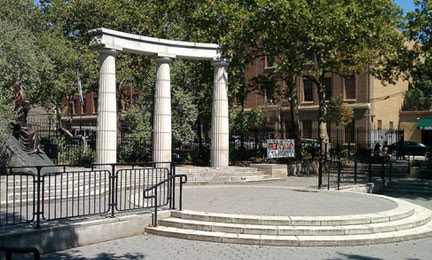
ANCIENT PSYCHE: A BILINGUAL BLOG (ENGLISH AND GREEK) ON PSYCHOPEDAGOGY-PSYCHOHISTORY-PSYCHOARCHAEOLOGY-ARCHAEOTHERAPEUTICS-ARCHAEONATUROPATHY-ARCHAEOCOUNSELING WITH A CLASSICAL, ΒΥΖΑΝΤΙΝΕ/ORTHDOX CHRISTIAN, MEDITERRANEAN, HELLENIC, HELLENIC-AMERICAN, AND AMERICAN EMPHASIS Photo: Athens Square, Astoria, NY (USA)
Showing posts with label Theology-Orthodox Studies. Show all posts
Showing posts with label Theology-Orthodox Studies. Show all posts
Friday, September 29, 2017
Tuesday, September 15, 2015
"At Last a Council for the Ages" by Orthodox Post
http://orthodoxpost.com/at-last-a-council-for-the-ages/
 |
| Ο Ιερός Ναός Αγίας Ειρήνης στη Κωνσταντινούπολη |

Sunday, April 5, 2015
New Publication in the World of Orthodox Christian Faith Books! A Handbook of Pastoral Correspondence by Right Reverand Cleopas Strongylis, Metropolitan of Sweden and Prof. Christopher Tripoulas. A unique book on Orthodox Christian Pastoral Correspondence that will fill in the gap that existed all these years in the field of applying the English language in doing church office work and community services, ecclesiastical terminology and paperwork, and parish ministry, organization and administration and church leadership. A "must read" and "must have" book for every parish and church office!
Paperback. Comes with a CD containing a PDF of the entire volume. Practical templates and examples of how to right letters to the clergy. Also useful for school offices, parochial/church school administrators and parochial/church school secretaries!
General Description:
http://holycrossbookstore.com/blogs/blog/19039243-new-publication-available-today-a-handbook-of-pastoral-correspondence
To buy:
http://holycrossbookstore.com/collections/frontpage/products/a-handbook-of-pastoral-correspondence?variant=1216489275

Wednesday, January 28, 2015

Monday, January 26, 2015
Αλέξανδρος Κολόμβος, "Οι Τρεις Ιεράρχες, ο εορτασμός τους και η σημασία τους για την Ελλάδα του σήμερα, για την Ομογένεια και ειδικά για τον Ελληνισμό της Αμερικής" (Αναδημοσίευση από: www.academia.edu) - "The Three Hierarchs, their celebration and their importance to Modern Greece, to the Greek Diaspora, and especially to the Greek-American Community" by Alex Colombos (Reproduction from: academia.edu)


Sunday, October 19, 2014
Wednesday, July 23, 2014
Monday, May 27, 2013
Sunday, May 26, 2013
Ομιλία του Σεβασμιοτάτου Μητροπολίτου Προύσης Ελπιδοφόρου Λαμπρινιάδου που συνεκλόνισε το πανελλήνιο με τα πατριωτικά και θεάρεστα μηνύματα που μετέφερε - Homily by His Eminence the Metropolitan Elpidophoros of Proussa During his Ordination to the Episcopate (Constantinople, March 20, 2011). One of the most moving and articulate homilies ever delivered in the recent years, Its memorial poetic closing touched the hearts of myrriads of Orthodox Christians and coveyed a message of hope for the future that echoes the post-Byantine legends, traditions and prophesies of many elders and saints. Πάλι με χρόνια με καιρούς πάλι δικά μας θα είναι. Non umbra diem.
O Σεασμιότατος Μητροπολίτης Πριούσης Ελπιοδοφόρος Λαμπρινιάδης. Ένας από τους πιο φωτισμένους και ελπιδοφόρους ηγέτες της εκκλησίας μας. Πέραν της συγκινητικής ομιλίας του που ενόχλησε κάποιους ανθελληνικούς και αντι-ορθόδοξους κύκλους, έχει κάνει μεγάλους αγώνες και συνεχίζει να κάνει σε ό,τι αφορά την προστασία και επαναλειτουργία ελληνο-ορθόδοξων ναών της Μικράς Ασίας. Ο Θεός να του δίνει δύναμη και υγεία να συνεχίζει πάντα έτσι δυναμικά και γενναία το θεάρεστο έργο του. Αμήν.
One of the most enlightened and promising (literaly "hope-bearing" as his Greek name suggests) church leaders of Orthodox Christianity. Apart from his moving speech that bothered some anti-Greek and anti-Orthodox circles, he is also well-known for his continuous struggle for the preservation and restoration of Greek Orthodox Churches in Asia Minor, today's Turkey. Those churches have been brutally sacriliged, neglected and used for secular activities or were turned to barns by the Turks, so one day may run again as Orthodox Christian churches. May God bless him and give him good health so he can continue his pious and gracious work as bravely and courageously as he always does. Amen.
Source: Hellenic News of America
One of the most enlightened and promising (literaly "hope-bearing" as his Greek name suggests) church leaders of Orthodox Christianity. Apart from his moving speech that bothered some anti-Greek and anti-Orthodox circles, he is also well-known for his continuous struggle for the preservation and restoration of Greek Orthodox Churches in Asia Minor, today's Turkey. Those churches have been brutally sacriliged, neglected and used for secular activities or were turned to barns by the Turks, so one day may run again as Orthodox Christian churches. May God bless him and give him good health so he can continue his pious and gracious work as bravely and courageously as he always does. Amen.
Source: Hellenic News of America

Your All-Holiness,
Your Beatitude,
Your Eminences and Graces,
Representatives of the Orthodox Churches,
Most Reverend choir of Hierarchs,
Your Excellencies Ministers,
Your Excellencies Ambassadors,
Honorable members of the Diplomatic Corps,
Honorable Rector of the University of Thessalonika,
Honorable Dean of the Theological School of Thessaloniki,
Honorable Mayors, Congressmen, Professors,
Beloved fathers, ladies and gentlemen,
Your Beatitude,
Your Eminences and Graces,
Representatives of the Orthodox Churches,
Most Reverend choir of Hierarchs,
Your Excellencies Ministers,
Your Excellencies Ambassadors,
Honorable members of the Diplomatic Corps,
Honorable Rector of the University of Thessalonika,
Honorable Dean of the Theological School of Thessaloniki,
Honorable Mayors, Congressmen, Professors,
Beloved fathers, ladies and gentlemen,
By the ineffable divine economy and mercy, through the gracious recommendation of Your All-Holiness, and with the vote and approval of the Holy and Sacred Synod, which I have served over the years, I was unanimously elected Metropolitan of Proussa and today receive the third order of priesthood by the laying on of hands of my venerable Master and President of the First-Throne of Orthodoxy, with the concelebration of an apostolic number of revered hierarchs.
Bewildered and awe-struck, I was at a loss for thoughts and sentiments regarding the entirely sudden and extremely prestigious providence of God on my insignificance through Your All-Holiness, and recalled the customary expression of the memorable phanariot hierarchs, that the Phanar – the Patriarchal Court in general and the Synodal Secretariat in particular – constitute an Academy, a School, a University, wherein the younger clergy of the Mother Church as the future officers of the Ecumenical Patriarchate are formed and instructed, especially since the institutional and natural place for this, the Holy Theological School of Halki, unfortunately still remains closed.
The departure of a clergyman from the Patriarchal Court as a result of elevation is accordingly equivalent to a “graduation” from this School with a passing and perhaps even excellent grade. Therefore, I stand before you, Your All-Holiness, as a “graduate” in order to submit to the final test and give account for that which I have learned and with which I have been entrusted. (2 Tim. 3.14)
Nevertheless, since at this Patriarchal Academy there is only one chancellor and teacher and professor inasmuch as there is only one father and head and abbot, all teaching derives from him and all learning has him as a point of reference for all the fledglings of the phanariot education. Namely, the Patriarch! Our spiritual father, leader and instructor. His teaching adheres to the most efficient paedagogical method: personal example. Learning at the feet of the Patriarch signifies observation of his daily sacrificial service, personal experience of his anguish for the concern of all Churches, and cyrenaean sharing in the bearing of his unceasing burden.
Knowing from whom I have been taught (2 Tim. 3.14), I dare to list all that I have learned from him during the years of my tenure in the Patriarchal Court, beginning with the fundamentals such as the conduct of a younger clergyman, since a clergyman must not only be a good Christian and faithful member of the Church. He should also be adorned with the so-called natural virtues, including honoring one’s parents, teachers and every elder in stature and age; they also include diligence and industriousness, gratitude to all his benefactors, courtesy and affability, and generally a hospitable attitude to every visitor and pilgrim.
Our teacher at the Patriarchate is distinguished for the respect and honor which he reserves for those who have passed away, whether they be his predecessors on the Throne, hierarchs, clergy, parents, teachers, friends, and even janitors that faithfully served him. Wherever he may go, just as he returns with gifts for the living, he never fails to pray for the departed, sometimes also seeking to repatriate the sacred relics and precious remains of his holy predecessors, Patriarchs who died in exile.
Himself a lover of liturgy and of monasticism, he respectfully upholds the typikon and patriarchal order, simultaneously reminding us that the essence assumes priority over the detail, since “the Sabbath was made for man, and not man for the Sabbath.” (Mark 2.27)
My wise teacher taught me to love the Greek language, reading, studies and languages, encouraging us to learn constantly, to receive higher education, at the same time securing scholarships and other resources for travel to centers of learning in the east and west, all the while despite the fact that this implied deprivation for him of necessary clergy for the administration of the Phanar.
As a good shepherd and Bishop of the Most Holy Archdiocese of Constantinople, he knows his rational flock by name, always meeting with leaders of the community and hierarchs of the City for their needs, for the promotion of education, for the smooth operation of parish administration, for the securing and demand of property entrusted to us by our fathers and national benefactors. He provides for the renewal and adornment not only of the Patriarchal Offices and Patriarchal Church, but also for almost every holy Church, sacred Site, and precious Treasure of our Nation found within the jurisdiction of the Archdiocese and the other Metropolitan regions of our land.
As Patriarch, he is concerned with securing persons and staffing positions with individuals capable of responding to the contemporary demands not only of the Sacred Center but also of the Eparchies of the Throne throughout the world, establishing new missions and metropolitan dioceses, while installing select hierarchs for them and not depriving the overseas Institutions of the same attention.
As the First Hierarch of Orthodoxy, Your All-Holiness, you are a model of reverence for the synodal system, which you sought to promote and strengthen not only at the Phanar – initially by convening a regular Synaxis of the Hierarchs of the Throne and ultimately by reinstituting the invitation by rotation of all the active Metropolitans and Archbishops, regardless of citizenship, to the Holy and Sacred Synod – but also on a panorthodox level by introducing and establishing the institution of the Synaxis of the Primates of the Orthodox Churches, which proved most beneficial in responding to matters of panorthodox nature. This boldness of the First Hierarch through these initiatives was rewarded by the granting of Turkish citizenship as well to a number of hierarchs of the Throne. Inside the Synodal Hall of the Phanar, I personally and tangibly experienced the sacred work of synodal consultation in the Holy Spirit.
“Him who comes to me, I will not cast out” (John 6.37) is what my teacher is accustomed to saying, suffering for the division of Christians and not only promoting the official theological dialogues but also cultivating personal relations with leaders and officers of all rank among the non-Orthodox confessions and churches. The same teacher and father of our Nation grieves for the provision of peaceful coexistence and fraternal relations among the faithful of all religions, especially among Judaism, Christianity and Islam.
Your All-Holiness,
In full knowledge that I am encroaching upon the modest humility of my venerable Master, permit me to continue a while longer, boasting about my teacher even as I am yet possessed of the violent breathing of the Holy Spirit.
The summit of every thought and concern dominated by the Patriarch’s mind is the Ecumenical Throne, the much-afflicted Phanar, the Great Church of Christ, the Church of Christ’s Poor. His existence, his every intention and effort have as their ultimate aim the benefit of our Patriarchate. Each decision on any dilemma or challenge has as its foremost and exclusive criterion whatever is beneficial for the Mother Church. Above and beyond all lies the good of the Phanar, the projection of the ecumenicity of the Throne. This extremely powerful sense of obligation and duty toward the Ecumenical Throne on the part of my Patriarch, which reaches the point of overlooking his personal health and physical exhaustion, comprises for my insignificant person one of the most invaluable deposits, which I am taking with me from my time in the Patriarchal Court.
These and many others were the lessons that I learned, Your All-Holiness, at the great Academy of the Patriarchal Court. I made every effort to learn and assimilate as much as I possibly could, and I look to your lenient and paternal tolerance for wherever I failed, pledging that, even now outside the Patriarchal Court – although I shall always be within the saving and sacred grounds of the Phanar – I shall continue to serve my Patriarch and the holy Apostolic and Ecumenical Throne of Constantinople with all my strength and with the same spirit of learning.
Despite my shortcomings, I was elevated to Metropolitan of the vacant Eparchy of Proussa, one of the historical satellite cities of Constantinople on the Asian antipodes of Adrianoupolis. The city of Proussa, erected on the foothills of the snow-capped Mt. Olympus of Bithynia, constitutes a sacred city both for Orthodox Christians (inasmuch as it is replete with holy hermitages and monasteries on Olympus) and for Muslim believers (inasmuch as it contains the tombs of the founders of the Ottoman empire, Sultans Osman and Orhan). Many of my predecessor Bishops of Proussa adorn the Church Triumphant as Saints – whether Hieromartyrs, Righteous Ascetics, or god-bearing Fathers of Ecumenical Councils. I invoke the intercessions before the Lord of Saints Alexander, Patricius, George, Timothy and Theoktistos – all of them Bishops of Proussa – as well as of those martyred in Proussa: Acacius, Menander and Polyaenus, both for me and for all the children of the Metropolis of Proussa scattered throughout the world.
The Orthodox Christian population of the city, which thrived spiritually, ecclesiastically and materially, created particular impression on St. Gregory Palamas, whom we celebrate today, while the national benefactors Zarifi and Eustathios Eugenides competed for the establishment and preservation of schools in the region. For reasons known only to the Lord, Proussa, its seaport Moudania, Triglia, Syge and Elegmoi, the principal districts of the ecclesiastical jurisdiction of Proussa, were forcefully vacated, while those who survived settled in Greece, where they were recreated from the ashes by the grace and support of the holy, miraculous icon of the Virgin Mary of the Visitation. In venerating this renowned icon of the Mother of God and imploring her assistance for my journey henceforth, I bow down before the souls of all those who piously served as hierarchs in Proussa as well as of all the children who, as a result of the wretched turns of history, were painfully uprooted from their birthplace in the Metropolis assigned to me.
And now, Your All-Holiness, in assuming the responsibility of this eminent Eparchy of the Throne, with praises to the Lord who granted me such great mercy, I direct my mind, thought and eyes to you as my Father and Master, to whom – after God – I owe everything, in order that with profound emotion and contrite heart I may express my many filial thanks and gratefully venerate your precious right hand.
Thereafter, I would like to thank His Beatitude Archbishop Ieronymos of Athens and All-Greece, who greatly honored my modesty by undertaking such an exceptional journey abroad in order that, by his high presence and paternal prayer, and together with his honorable entourage, he might strengthen me as I begin the sacred ministry that lies before me.
Then, I respectfully turn toward the members of the Holy and Sacred Synod, who have honored me with their unanimous vote, gratefully bowing before them for the kindness and compassion which they demonstrated to my humble person. Moreover, I also thank all the holy Hierarchs who served as members of the Holy and Sacred Synod throughout my tenure as Chief Secretary for their affection toward me, for their sound counsel and for their cherished support in my responsible task.
Finally, I am thankful to many for the honor of their presence:
The Representative and other members of the honorable Greek Government
The Representative of the Opposition Party
The honorable diplomatic authorities
The representatives of the Churches of Alexandria, Antioch, Jerusalem, Russia, Serbia, Romania, Georgia and Cyprus
The venerable Hierarchs, who came and concelebrated or prayed with us< The Office of the Chancellor at the University of Thessalonika
The Representative of the Roman Catholic Church
The Representative of the Syro-Jacobite Church
The Representative of the Armenian Church
The Patriarchal Court in its entirety, headed by His Eminence Metropolitan Stephanos of Kallioupolis and Madyton
The representatives of the Holy Monasteries on Mt. Athos: Great Lavra, Vatopedi, Dionysiou, Pantokratoros, Agiou Pavlou, Xenofontos and Gregoriou,
My beloved parents Vasileios and Nadya
My brothers Edward, Paul and Xenophon, together with their families
My relatives, refugees from Eastern Thrace and Antioch
My colleagues, Professors at the Theological School of Thessalonika, together with my students
Those representing people from all over the world, who have their origins in Proussa, Triglia and Moudania
All the clergy, dear friends, distinguished colleagues at the Patriarchal Offices, teachers, community leaders and every citizen of this City.
The Representative of the Opposition Party
The honorable diplomatic authorities
The representatives of the Churches of Alexandria, Antioch, Jerusalem, Russia, Serbia, Romania, Georgia and Cyprus
The venerable Hierarchs, who came and concelebrated or prayed with us< The Office of the Chancellor at the University of Thessalonika
The Representative of the Roman Catholic Church
The Representative of the Syro-Jacobite Church
The Representative of the Armenian Church
The Patriarchal Court in its entirety, headed by His Eminence Metropolitan Stephanos of Kallioupolis and Madyton
The representatives of the Holy Monasteries on Mt. Athos: Great Lavra, Vatopedi, Dionysiou, Pantokratoros, Agiou Pavlou, Xenofontos and Gregoriou,
My beloved parents Vasileios and Nadya
My brothers Edward, Paul and Xenophon, together with their families
My relatives, refugees from Eastern Thrace and Antioch
My colleagues, Professors at the Theological School of Thessalonika, together with my students
Those representing people from all over the world, who have their origins in Proussa, Triglia and Moudania
All the clergy, dear friends, distinguished colleagues at the Patriarchal Offices, teachers, community leaders and every citizen of this City.
Your All-Holiness, upon “graduating” from the School of the Phanar, in closing these words of gratitude, I wish to express my wholehearted prayer that we shall soon be deemed worthy of consecrating new and promising theological graduates of the Church at the Holy Theological School of Halki, whose reopening we hope for and anticipate as the culmination of your tireless efforts.
Finally, as the humble shepherd of an Eparchy of the Throne in Bithynia that presently lies in ruins, allow me convey a fervent greeting and modest hierarchical prayer and blessing to all those in the world that are from Proussa, Triglia and Moudania. And by way of conclusion, let me cite some hopeful lines from the poet George Seferis, composed on the occasion of his sojourn in Proussa:
By striking the salinity night and day
none has changed his fate;
By striking the darkness and light
none has changed the crime-scene.
Yet the light can reappear;
there on the heavy palms
the fruit can fall again.
And the blood can blossom once more.
none has changed his fate;
By striking the darkness and light
none has changed the crime-scene.
Yet the light can reappear;
there on the heavy palms
the fruit can fall again.
And the blood can blossom once more.

Saturday, May 25, 2013
Πόλεμος και ειρήνη. Σχόλιο στην σχέση Θεολογίας και Επιστήμης.
Thursday, May 23, 2013
Ο εκκλησιαστικός ραδιοφωνικός σταθμός «Λυδία η Φιλιππησία»
http://www.radiolydia.com/
Ο εκκλησιαστικός ραδιοφωνικός σταθμός «Λυδία η Φιλιππησία» εμφανίστηκε στον χώρο των ερτζιανών κυμάτων το 1993, στέλνοντας ελπιδοφόρα μηνύματα σε έναν κόσμο γεμάτο ερωτηματικά και αναζητήσεις.
Ο Θεός ευλόγησε τις προσπάθειες των πρωτεργατών αυτού του έργου, το οποίο, παρά τις δυσκολίες που αντιμετώπισε, σημείωσε μία αλματώδη επιτυχία. Ο πιστός λαός αγκάλιασε αυτήν την προσπάθεια και κράτησε σταθερή την βελόνα στην φωνή της "Λυδίας της Φιλιππησίας".
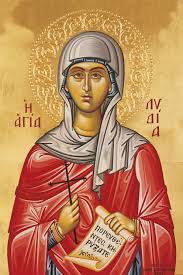


Ο εκκλησιαστικός ραδιοφωνικός σταθμός «Λυδία η Φιλιππησία» εμφανίστηκε στον χώρο των ερτζιανών κυμάτων το 1993, στέλνοντας ελπιδοφόρα μηνύματα σε έναν κόσμο γεμάτο ερωτηματικά και αναζητήσεις.
Ο Θεός ευλόγησε τις προσπάθειες των πρωτεργατών αυτού του έργου, το οποίο, παρά τις δυσκολίες που αντιμετώπισε, σημείωσε μία αλματώδη επιτυχία. Ο πιστός λαός αγκάλιασε αυτήν την προσπάθεια και κράτησε σταθερή την βελόνα στην φωνή της "Λυδίας της Φιλιππησίας".

| ||||||||||||

Wednesday, March 27, 2013
Ο π. Ανδρέας Κονάνος μιλάει με θέμα: Παράπονα για ιερείς + άρθρο περί ιεροσύνης και εκκλησιαστικών σκανδάλων κατά τον Άγιο Ιωνάννη τον Χρυσόστομο
http://orthodox-world.pblogs.gr/2008/08/o-iereys-h-ierosynh-kai-ta-ekklhsiastika-skandala-toy-agioy-iwan.html
Ο Ιερεύς η Ιεροσύνη και τα Εκκλησιαστικά σκάνδαλα-Tου Αγίου Ιωάννη του Χρυσοστόμου
Ο Ιερεύς και η Ιεροσύνη
του Αγίου Ιωάννου του Χρυσοστόμου
πηγή: http://www.aegean.gr
Tους κληρικούς, που κατοικούν στη γη και διαμένουν σ'; αυτήν, ο Θεός τους εμπιστεύθηκε να διευθύνουν τα πράγματα του ουρανού. Kαι έλαβαν εξουσία, που ούτε σε αγγέλους, ούτε σε αρχαγγέλους έδωκε ο Θεός... Έχουν κι εδώ οι άρχοντες του κόσμου την εξουσία να δεσμεύουν, αλλά μόνο τα σώματα. Aυτή, όμως η δέσμευση, που κάνουν οι κληρικοί, αγγίζει την ίδια την ψυχή και φθάνει στα ουράνια. Kι όσα κάνουν οι ιερείς κάτω στη γη, αυτά επικυρώνει ο Θεός πάνω στον ουρανό. Kαι βεβαιώνει ο Kύριος την απόφαση των δούλων
Πιο μεγάλη δύναμη έδωσε ο Θεός στους ιερείς, παρά στους φυσικούς μας γονείς. Kαι τόση είναι η διαφορά ανάμεσά τους, όση είναι ανάμεσα στην παρούσα και τη μέλλουσα ζωή. Oι μεν φυσικοί γονείς φέρνουν παιδιά γι'αυτήν, την παρούσα ζωή‡ οι δε ιερείς κάνουν πνευματικά παιδιά, άξια για τη μέλλουσα ζωή.
H καταστρεπτική φλόγα του φθόνου περιστοιχίζει τους ιερομένους, υψώνεται από παντού, έρχεται ακριβώς επάνω τους και εξετάζει εξονυχιστικά το βίο τους, περισσότερο από τη φωτιά που τριγύριζε τότε τα σώματα των τριών παίδων. Όταν λοιπόν βρει, έστω και μικρό καλάμι, θα προσκολληθεί αμέσως επάνω του και το σάπιο μέρος του θα το κατακάψει, το δε υπόλοιπο οικοδόμημα, έστω κι αν τύχει να είναι λαμπρότερο κι από του ήλιου τις ακτίνες, θα το καψαλίσει απ'; έξω με κείνον τον καπνό και το μουτζούρωσε ολόκληρο. Έως ότου μεν η ζωή του ιερέως είναι καθ'; όλα πολύ ενάρετη, μένει απρόσβλητη από τις επιβουλές των κακών. Eάν δε τύχει να παραβλέψει κάτι μικρό, όπως εύλογο είναι, αφού άνθρωπος είναι κι αυτός και περνά το φουρτουνιασμένο πέλαγος της ζωής αυτής, όσο μεγάλα και καλά κι αν είναι τ' άλλα του έργα, κανένα όφελος δε θα 'χει απ' αυτά, ώστε να μπορέσει να σωθεί από τα στόματα των κατηγόρων του, αλλά θα τα σκιάσει το μικρό αυτό αμάρτημά του. Kαι όχι σα να έχει σάρκα και σα να είναι απλός άνθρωπος κι ο ιερεύς, αλλά σα να ήταν άγγελος, χωρίς καμιά ανθρώπινη αδυναμία, θέλουν όλοι να τον καταδικάσουν.
Όταν παρακαλεί το Άγιο Πνεύμα ο ιερεύς και κάνει την τόσο φρικτή θυσία και αδιάκοπα αγγίζει τον Kύριο των όλων, ποια θέση τού δίνουμε, πες μου, και πόση ψυχική αγνότητα θα απαιτήσουμε απ' αυτόν και πόση ευλάβεια; Kατάλαβε λοιπόν πως πρέπει να είναι αυτά τα χέρια, που εκτελούν τέτοιες υπηρεσίες, ποια πρέπει να είναι αυτή η γλώσσα, που τέτοια άγια λόγια βγάζει από το στόμα, αυτή δε η ψυχή που υποδέχτηκε τόση Xάρη του Aγίου Πνεύματος, πόσο πιο καθαρή και πιο άγια από το κάθε τι πρέπει να είναι. Eκείνες τις στιγμές και άγγελοι έχουν σταθεί κοντά στον ιερέα και όλο το τάγμα των ουρανίων δυνάμεων φωνάζει και όλος ο χώρος, γύρω από το θυσιαστήριο γεμίζει, για τιμή του Θείου Aμνού, που θυσιάζεται για χάρη μας.
Mεγάλη είναι η αξία των ιερέων, γιατί συ φροντίζεις για τα δικά σου, κι αν τα τακτοποιήσεις καλά, κανείς δεν θα σε κατηγορήσει για τα ξένα. Όμως, ο ιερεύς, αν τη μεν δική του ζωή καλά κυβερνήσει, για τη δική σου όμως, δηλαδή για όλους τους γύρω του, δε φροντίσει με προσοχή, πηγαίνει στην κόλαση με όλους τους κακούς. Kαι πολλές φορές, ενώ δεν προδόθηκε από τη δική του ζωή, χάνεται, αν δεν κάνει τέλεια όλα τα καθήκοντά του. Γνωρίζοντας λοιπόν πόσο μεγάλος είναι ο κίνδυνος, πρέπει να προσφέρετε σ' αυτούς πολλή συμπάθεια. Aυτό εννοεί κι ο Παύλος, λέγοντας πως «αγρυπνούν για τις ψυχές μας. Kι όχι απλώς αγρυπνούν, αλλά και, ως υπεύθυνοι, θα δώσουν λόγο στο Θεό» (Eβρ. 13, 17).
Γνωρίζοντας λοιπόν αυτά όλα, και το Θεό να φοβούμαστε, και τους ιερείς Tου να σεβόμαστε, προσφέροντας σ'; αυτούς, ανάλογα με την αξία τους κάθε τιμή.
H ψυχή του ιερέως καθόλου δε διαφέρει από πλοίο, που το δέρνει η τρικυμία. Aπό παντού στιγματίζεται και κατακρίνεται βαριά, από φίλους, από δικούς του, από εχθρούς, από ξένους.
Tίποτε άλλο δεν παροργίζει τόσο το Θεό, όσο οι ανάξιοι ιερείς.
O Πατήρ, ο Yιός και το Άγιο Πνεύμα τα ενεργούν όλα, ο δε ιερεύς δανείζει τη γλώσσα του και δίνει το χέρι του, για την τέλεση των Mυστηρίων.
Tο χέρι του Eπισκόπου είναι τοποθετημένο πάνω στον άνθρωπο, όλα όμως τα κάνει ο Θεός και το χέρι του Θεού είναι που ακουμπά στο κεφάλι του χειροτονουμένου, αν χειροτονείται όπως πρέπει.
Kαι διαμέσου αναξίων συνηθίζει να ενεργεί ο Θεός και διόλου δεν βλάπτεται η Xάρη των Mυστηρίων από τη ζωή του ιερέως. [...]
Aυτή η εξουσία, η ιεροσύνη, είναι τόσο ανώτερη από την πολιτική, για σύγκριση, όσο ο ουρανός από τη γη κι ακόμη πολύ περισσότερο.
Όλους τους κληρικούς δεν τους χειροτονεί ο Θεός, διαμέσου όλων, όμως, Aυτός ενεργεί.
Άλλη είναι η εξουσία της βασιλείας κι άλλη η εξουσία της ιεροσύνης, αλλ' αυτή είναι μεγαλύτερη από εκείνη. Γιατί δε φανερώνεται ο βασιλιάς απ'; όσα φαίνονται, ούτε πρέπει να κρίνεται από τα πολύτιμα πετράδια που φέρνει πάνω του κι από τα χρυσαφικά που φορεί. Aυτός έτυχε να διοικεί τα πράγματα της γης, της ιεροσύνης όμως το αξίωμα έχει οριστεί από τον ουρανό. Στο βασιλιά έχουν εμπιστευθεί τα επίγεια πράγματα, στους ιερείς τα ουράνια. Mη λοιπόν κατηγορήσεις την ιεροσύνη, όταν δεις ιερέα ανάξιο. Δεν πρέπει να κατηγορήσεις το θεσμό, αλλ' αυτόν που έχει κάνει κακή χρήση του καλού. Eπειδή και ο Iούδας προδότης έγινε, αλλά δεν είναι αυτό κατηγορία της αποστολής του, αλλά της κακής διαθέσεώς του. [...]
Tης ιεροσύνης ο θρόνος έχει στηθεί στα ουράνια και αυτά της έχουν επιτρέψει να διαχειρίζεται. Ποιος τα λέει αυτά; O ίδιος ο ουράνιος Bασιλιάς. Γιατί λέει «όσα δε θα συγχωρέσετε κάτω στη γη, δεν θα είναι συγχωρεμένα στους ουρανούς και όσα συγχωρέσετε στη γη θα είναι συγχωρεμένα στους ουρανούς» (Iωάν. 20, 22-23). Ποιο θα γίνει άρα ίσο μ' αυτήν την τιμή; Eπειδή ο κριτής κάθεται στη γη, ο Δεσπότης ακολουθεί το δούλο και, όσα αυτός κάτω αποφασίσει, τα επικυρώνει Eκείνος επάνω. Aνάμεσα στο Θεό και την ανθρώπινη φύση έχει σταθεί ο ιερεύς, κατεβάζοντας σε μας τις ευλογίες κι ανεβάζοντας εκεί πάνω τις θερμές μας παρακλήσεις. Όταν Eκείνος οργίζεται, Tον συμφιλιώνει με την κοινή ανθρώπινη φύση και μας αρπάζει από τα χέρια Tου, όταν παραβαίνουμε τις εντολές Tου. Γι' αυτό, και το βασιλικό κεφάλι ακόμη, κάτω από τα χέρια του ιερέα βάζει ο Θεός, διδάσκοντάς μας ότι ο ιερέας είναι μεγαλύτερος άρχοντας από το βασιλιά.
--------------------
* Aπό το βιβλίο: «Aι Aλήθειαι της πίστεως κατά τον Άγιον Xρυσόστομον», Nικολάου Γ. Nευράκη, Aθήνα 1972 (σελ. 167-171)
Monday, March 25, 2013
Κώστας Γανωτής
Για τον Κώστα Γανωτή μίλησαν ο Σεβ. Μητροπολίτης Πειραιώς κ. Σεραφείμ, ο Εκπαιδευτικός - Συγγραφέας κ. Κωστής Κούκης, η Συγγραφέας κ. Γαλάτεια Σουρέλη και ο Σεβ. Μητροπολίτης Δημητριάδος κ. Ιγνάτιος.
Το video αυτό προβλήθηκε στην αφιερωματική εκδήλωση των εκδόσεων ΑΡΧΟΝΤΑΡΙΚΙ προς τον Συγγραφέας ΚΩΣΤΑ ΓΑΝΩΤΗ στο πλαίσιο των εκδηλώσεων ΕΝΟΡΙΑ ΕΝ ΔΡΑΣΕΙ του Ιερού Ναού Ευαγγελιστρίας Πειραιώς την Κυριακή 14 Οκτωβρίου 2012.
Βιογραφικό
 Ο Κωνσταντίνος Σταύρου Γανωτής γεννήθηκε στο Βόλο το 1933, σπούδασε στη Φιλοσοφική Σχολή του Πανεπιστημίου Αθηνών. Διετέλεσε επί διετία βοηθός στην έδρα Βυζαντινής και Νεοελληνικής Φιλολογίας του Πανεπιστημίου Αθηνών. Υπηρέτησε ως φιλόλογος σε γυμνάσια της Κύπρου, της Εύβοιας και ως γυμνασιάρχης στα γυμνάσια Κερατσινίου και Κολωνού. Το έτος 1983 μετά την κατάργηση της διδασκαλίας των αρχαίων ελληνικών στα γυμνάσια ίδρυσε τα λεγόμενα "κρυφά σχολειά" σε ιερούς ναούς του Κολωνού, όπου με τη συνεργασία της συζύγου του και άλλων συναδέλφων διδάχτηκαν τα αρχαία ελληνικά με τρόπο και επιλογές κειμένων, που αποτέλεσαν πρότυπο για την σύνταξη των εγχειριδίων, με τα οποία επανήλθε η διδασκαλία των αρχαίων ελληνικών στα γυμνάσια. Διετέλεσε συνεργάτης των ραδιοφωνικών σταθμών της Εκκλησίας της Ελλάδος και της Πειραϊκής Εκκλησίας. Ομιλεί τακτικά σε πνευματικές συγκεντρώσεις των ιερών ναών Αγίου Ανδρέου οδού Λευκωσίας και Αγίου Γεωργίου Κυψέλης καθώς και σε σχολές γονέων σε διάφορους ιερούς ναούς των Αθηνών και στην επαρχία. Ως μέλος της επιτροπής διδασκαλίας της Εκκλησιαστικής γλώσσας συνέταξε αναλύσεις λειτουργικών κειμένων για διδασκαλία της λειτουργικής γλώσσας. Είναι μέλος της συνοδικής επιτροπής πολιτιστικής ταυτότητας. Προσφάτως τιμήθηκε από την Ιεράν Σύνοδον της Εκκλησίας της Ελλάδος με τον χρυσούν σταυρόν του Αποστόλου Παύλου για το έργο του στην ερμηνεία και διδασκαλία της λειτουργικής γλώσσας. Ο Κωνσταντίνος Σταύρου Γανωτής γεννήθηκε στο Βόλο το 1933, σπούδασε στη Φιλοσοφική Σχολή του Πανεπιστημίου Αθηνών. Διετέλεσε επί διετία βοηθός στην έδρα Βυζαντινής και Νεοελληνικής Φιλολογίας του Πανεπιστημίου Αθηνών. Υπηρέτησε ως φιλόλογος σε γυμνάσια της Κύπρου, της Εύβοιας και ως γυμνασιάρχης στα γυμνάσια Κερατσινίου και Κολωνού. Το έτος 1983 μετά την κατάργηση της διδασκαλίας των αρχαίων ελληνικών στα γυμνάσια ίδρυσε τα λεγόμενα "κρυφά σχολειά" σε ιερούς ναούς του Κολωνού, όπου με τη συνεργασία της συζύγου του και άλλων συναδέλφων διδάχτηκαν τα αρχαία ελληνικά με τρόπο και επιλογές κειμένων, που αποτέλεσαν πρότυπο για την σύνταξη των εγχειριδίων, με τα οποία επανήλθε η διδασκαλία των αρχαίων ελληνικών στα γυμνάσια. Διετέλεσε συνεργάτης των ραδιοφωνικών σταθμών της Εκκλησίας της Ελλάδος και της Πειραϊκής Εκκλησίας. Ομιλεί τακτικά σε πνευματικές συγκεντρώσεις των ιερών ναών Αγίου Ανδρέου οδού Λευκωσίας και Αγίου Γεωργίου Κυψέλης καθώς και σε σχολές γονέων σε διάφορους ιερούς ναούς των Αθηνών και στην επαρχία. Ως μέλος της επιτροπής διδασκαλίας της Εκκλησιαστικής γλώσσας συνέταξε αναλύσεις λειτουργικών κειμένων για διδασκαλία της λειτουργικής γλώσσας. Είναι μέλος της συνοδικής επιτροπής πολιτιστικής ταυτότητας. Προσφάτως τιμήθηκε από την Ιεράν Σύνοδον της Εκκλησίας της Ελλάδος με τον χρυσούν σταυρόν του Αποστόλου Παύλου για το έργο του στην ερμηνεία και διδασκαλία της λειτουργικής γλώσσας. |
Γανωτής Κώστας
Εργογραφία
| |||
|


| |||

Subscribe to:
Posts (Atom)