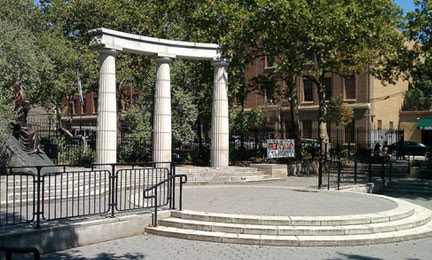
ANCIENT PSYCHE: A BILINGUAL BLOG (ENGLISH AND GREEK) ON PSYCHOPEDAGOGY-PSYCHOHISTORY-PSYCHOARCHAEOLOGY-ARCHAEOTHERAPEUTICS-ARCHAEONATUROPATHY-ARCHAEOCOUNSELING WITH A CLASSICAL, ΒΥΖΑΝΤΙΝΕ/ORTHDOX CHRISTIAN, MEDITERRANEAN, HELLENIC, HELLENIC-AMERICAN, AND AMERICAN EMPHASIS Photo: Athens Square, Astoria, NY (USA)
Showing posts with label counseling-συμβουλευτική. Show all posts
Showing posts with label counseling-συμβουλευτική. Show all posts
Wednesday, August 31, 2016
Monday, June 29, 2015
Thursday, June 4, 2015
Tuesday, March 24, 2015
Bullying in young adulthood and dorms is an issue yet not addressed in Greece: the case of Vangelis Giakoymakis, 20, whose recent suicide shook Greece and the entire world, as people now realize that bullying can also be an issue of post-secondary ed, adulthood and of every age and not a little school boy's problem! - Εκφοβισμός στην μετεφηβική και νεανική ενήλικη ηλικία και στις φοιτητικές και σπουδαστικές εστίες είναι ένα ένα ζήτημα που παρέμενε άγνωστο μέχρι την πρόσφατη τραγική περίπτωη του 20χρονου αυτόχειρα Βαγγέλη Γιακουμάκη καθώς ο κόσμος αρχίζει και συνειδητοποιεί ότι ο εκφοβισμός δεν είναι μόνο σχολικός, αλλά και σπουδαστικός και φοιτητικός και συχνά απαντά και στην ενήλικη ζωή και κάθε ηλικία!
English
http://www.keeptalkinggreece.com/2015/03/16/victim-of-bullying-vaggelis-giakoumakis-20-found-dead/
http://hellasfrappe.blogspot.com/2015/03/maria-menounos-touching-message-for.html
http://beforeitsnews.com/international/2015/03/victim-of-bullying-vaggelis-giakoumakis-20-found-dead-2485420.html
Greek
http://www.inewsgr.com/59/vangelis-giakoumakis-itan-telika-to-boulingk-i-kati-allo-pou-efere-ton-thanato-.htm
http://tvxs.gr/news/ellada/stoixeia-apo-poinologio-systimatiko-mpoylingk-kata-giakoymaki-atimoritoi-oi-drastes
http://heyevent.com/event/1426491674309955/

Tuesday, July 7, 2009
Socratic Influence on Gandhi: the Greek philosopher and the Indian satyagrahi in the search for truth and inner peace in today’s world of violence and turmoil
By Alex Colombos, MA, MPS, MA Ed
Certified History/Social Studies/Greek Teacher
 In an age of materialism, corruption and global violence, two names stand out from different time-periods and cultures, two men, ascetic and humble, tragically heroic and brave, utterly spiritual and noble. They sacrificed their bodies for their struggle against the denial of truth and for the freedom of intellectual expression and the attempt to awake the sleepy conscience of the haughty and the unfair, the morally weak ruler and the imbecile scholar. Those were Socrates of Athens and Gandhi of India.
 Although Gandhi is well-known for his severe critique of the Western Civilization, including the Greeks, in his Hind Swaraj (“The Indian Home-rule”), he was profoundly influenced and inspired by the eternal teachings and the moral stature of Socrates (Gandhi, M.K. Hind Swaraj, p. 45). Hind Swaraj, however is written in a way that reminds us the Socratic Method, as it is a dialogue between the Editor and the Reader. The editor of the book tries to guide his reader in a meditation on the situation of India enslaved by the British rule by asking questions which gradually enable the reader to search for a meaningful and reasonable consensus on what is good and just for the Indian people and finally see the point of the Home-Rule, which is the vision for an independent India, an India for the Indian people. Scholars have found affinities between Socratic and Gandhian thought and it is not an accident that Gandhi himself wrote a novel based on this great Greek philosopher.
It is Socrates that he always remains the Western representative of integrity, self-knowledge, and inner peace. He is the philosopher who never wrote, but myriads of writings are still written about him, the man who never received any money for teaching the youth and was never in need to publish anything for making himself or his ideas known, the man who selflessly sacrificed himself for his ideas and for his dedication to his city and to his conscience (Conford, pp. 30-55). Gandhi envisioned a hero-thinker of Socrates’ caliber in the Indian version of a Satyagrahi (the one who sacrifices himself through suffering for satyagraha or Truth-force) (Ghandi, M. K., Non-Violent Resistance p. 3) and he described his story in a paraphrased version of Plato’s Apology that he named the A Story of Satyagrahi, written in Gujarati (Gandhi L. 1997, 119). This character embodies the message of ahimsa or non-violence, (Gandhi, L, 1997, 115) a message that aims to global peace and which is perennial and essential, especially for our days of global conflict, materialism, terrorism, and turmoil.
Gandhi himself has included a list of ahimsaic votaries, which includes Pralahad, Harishchandra, and as Leela Gandhi says, he also includes Daniel and Socrates (Gandhi, 197, 118). A modern politician using a list of “immortal” people, such as Socrates for his political and nationalist agenda is really an audacity, not to mention going far enough to paraphrase Plato’s Apology. However, Gandhi’s concepts of ahimsa, anashakti yoga (the yoga of non-energism (Gandhi, L., p. 125, p. 129) or non-action), universal love and struggling against “slave morality” or resentment (Gandhi, L., p. 124) were meant to go beyond mere nationalism and entered a sphere of political metaphysics. That is because of the almost saintly way of Gandhi’s lifestyle, such as his celibacy, the denial of sex and his body. Gandhi dedicated to always telling the Truth, at least in his last years of life, which has been seen by many as unrealistic, utopian as Leela Gandhi believes, and inconsistent with the life of the politician or with Nehru’s realpolitic (Gandhi, L., pp. 136-138). Gandhi tried really hard to become a satyagrahi himself.
Gandhi believed that you don’t need to get physical and hurt people. There are other ways, such as protests, boycotts, strikes, flamboyant speeches, propaganda, and rhetoric, that he called satyagraha (“Truth-force”), “non-violence”, “ non-co-operation”, “passive resistance” and civil disobedience” (to the oppressor) (Gandhi, M.K., Non-Violent Resistance, p. 3). Henry Runkler observes that “As a result of Gandhi’s strikes and boycotts, men were thrown out of work and violent riots took place in English textile towns.” (Runkler, p. 282). Sri Aubindo is also one of those who objected Ghandi’s idea of non-violence and he goes far enough to say that “aggression is necessary for self-preservation and when the force ceases to conquer, it ceases to live...Hinduism has always been pliable and aggressive” (Sri Aubindo, Karmayogin, p.38). However, Socratic and Ghandian believes of “non-violence” have certainly influenced and inspired the majority of people all over the world through the centuries.
Gandhi used Socrates as a vehicle to launch his non-violent propaganda using him as “an exemplum for the correct fulfillment of Indian nationalism, simultaneously transforming him into a critic of Western civilization.” (Gandhi, L, 118). However, we would not be surprised if Socrates would have criticized modern practices that Gandhi criticizes baptizing them “Western”, such as cruelty against animals in the name of science or weapons of mass destruction, though weapons and cruelty to living organisms, including humans and animals, are timeless and “culture-less” issues. Socrates’ teachings indeed are very congruent with Gandhi’s strong feelings against injustice and disharmony and his visions of searching truth and inner peace.
Socrates, however, never spoke directly in favor of nationalism, but his thinking was purely humanistic and universal, an idealism that constructively and creatively inspired realistic plans of political actions, since his meditating on the ideal city (see Plato’s Republic) was based on the observation and public debate on issues, such as harmony in human relations, division of labor, the dynamics of workforce, social hierarchy and social stratification and the pathology of family and politics. Socrates used almost scientific methods, such as asking people in the market place and testing public opinion in various topics, and using reason and modeling the dynamics of natural forces for understanding social forces. Martha Nussbaum’s and Leela Gandhi’s made the assertions that the Greeks dichotomized theory and practice based on the description of poet as a man of words and emotions and the philosopher as a man of thought and reason in Plato’s Phaedrus (Gandhi, Leela, p. 106). The answer to these modern interpretations and assertions are that Socrates’ craft was quite practical and perennially inspirational for the modern political scientist as well as the politician. Socrates was both a man of reason, but also emotional, moral, spiritual, theoretical, and yet naturalist and practical. F. M. Conford said about the Age of Socrates that it is “only now that the Greek mind clearly perceives that social laws are not divine institutions operating with inevitable sanctions like the penalties of transgressing against natural law. The theory of social contract is announced” (Cornford, p. 42).
Despite the differences and the anachronism that lies in a comparison of Socrates and Gandhi, an ancient philosopher and a modern politician, Iyer’s description of the Satyagrahi easily reminds us Socrates: “that a satyagrahi does not fear for his body, he does not wish for the destruction of his antagonist...but has only compassion for him” (Iyer vol.3, p. 46). Socrates, indeed, ignored his student Phaedo’s proposal to escape the prison and save his own life, he never cursed his enemies and his judges, but accepted their decision with dignity and courage, he did not turn against his city, but obeyed it, as a child must respect and obey his/her parents, he was not afraid to die and sacrifice his body, not just to obey a divinity or a selfish voice of his ego, but to balance the equation of universal good and personal cost (Plato, Phaedo). He knew that if he would just escape he would be proved inconsistent and untrue to all these people who believed in his teaching, he would be a selfish man who hides in the dark, though he always preached ideas of spiritual enlightenment and harmonic relations between civil authorities and dissent citizens. Therefore, he chose not to turn his back to the court’s verdict which convicted him, though it was wrong. That’s exactly what Gandhi’s satyagrahi did and that’s what Gandhi did himself as he defied death, by continuing living the way his conscience dictated him, though his death was sudden as he was assassinated rather than having Socrates’ chances to escape his fate. It is a nobler act to have the chance to escape death and not to do so for your equally noble reasons.
Gandhi always cherished Socrates’ inner voice, as the voice of conscience, the real force of the satyagrahi. Gandhi always listened to that inner voice of his and we should give him credit for being brave and heroic enough to stick to his idea of listening to everybody’s opinion, but doing what his voice dictates. That’s great for a philosopher , but being a politician you also need to listen to the people and DO things that comply to the people’s will, which are those who elected you to this office. Otherwise, your governance is a form of narcissistic dictatorship.
Gandhi’s critique, as Iyer insists, is like Socrates’ critique against the spiritually blind people whose soul has become blind by the “eclipse of truth” (Iyer, vol. 1, p. 5). Erikson sensed this need of Socratic self-awareness for the European youth, which felt alienated by modernity (Erikson, pp. 9-10). Modern therapists, criminologists, and philosophers, such as the therapist and professor of philosophy Pierre Grimes, have seen how Socrates led his young students to the search of self-awareness and the truth of who they are and what they say, after exposing them to the “elenchus” or “testing”, a process of asking questions (Socratic Method) that reaches a “destructive” goal, or a point where denial, fallacy and error are sometimes painfully realized in dialogue (Brickhouse, T. C. & N. D. Smith, pp. 16-17) and tracing down maladaptive thoughts or pathologos (literally: “abnormal reasoning”) (Grimes & Uliana, pp. 18-59).
Regina Uliana, a clinical psychologist, empirically tested in an clinical study the effectiveness of Grimes’ model of Socratic Therapy, a cognitive model similar to Elis’ Rational-Emotive Therapy, and found it to be very successful with her patients! (Pierre & Uliana, pp.224-225). Gandhi’s similar practice of political dialectics between the oppressed/colonized Indian and the British colonizer/oppressor, the use of meditation and yoga, and the Indian concepts of ahimsa andsatyagraha set up an example of keeping spiritual sense in struggle rather than adapting mere raw violence, maintaining one’s conscience and soul intact and serving one’s people and his/her land by even sacrificing himself/herself for the search of truth, freedom, and justice. Gandhi also gave some wonderful tips for anger management that in combination with the Socratic Method could be used in counseling and psychotherapy, crisis intervention or conflict resolution: “...As extraneous aid take a hip-bath, i.e., sit in a tube full of cold water with your legs out and you will find that your passions have immediately cooled.” (Cf Ghandi, L, p.105). This even reminds us some of the techniques of stress management that have been used in applied psychophysiology and biofeedback and shows how the Indian Medicine, from the very ancient times, knew so well the human body and its relation to the soul and the mind!
Saint or yogi, thinker or politician, despite his inconsistencies, fallacies, and utopian thinking, Gandhi, like Socrates, is a an idealist visionary and a tragic hero. Gandhi is a rare icon of a humble, ascetic, skinny politician in an age of plump haughty politicians who live in luxury and corruption, a symbol, not only for India, but even for modern thinkers in general and the people who fight for inner and global peace, but who also at the same time struggle for their country and its freedom. What better example than the Greeks and especially Socrates could Gandhi find?
References
- Brickhouse, T.C. & Smith, N. D. Plato’s Socrates. New York: Oxford University Press.
- Cornford, F. M. Before and After Socrates. Cambridge: Cambridge University Press, 1932.
- Erikson, Erik, Gandhi’s Truth: On the Origins of Militant Non-Violence. London: Faber, 1970.
- Gandhi, Leela. Concerning Violence: The Limits and Circulations of Gandhian Ahimsa or Passive Resistance. Cultural Critique. Winter 1996-97, pp. 105-147.
- Gandhi, M.K. Non-Violent Resistance. New York: Schoken Books, 1951.
----------------, Hind Swaraj. Ahmedabad (India): Navijivin Publishing House, 1938.
- Grimes, Pierre & Regina Uliana, Philosophical Midwifery: A New Paradigm for Understanding Human Problems with Its Validation. California: Hyparxis Press, 1998.
- Iyer, Raghavan, ed. The Moral and Political Writings of Mahatma Gandhi, 3 volms. Oxford: University Press, 1987.
- Runkler, Gerald. Is Violence Always Wrong? The Journal of Politics, Vol. 38, No. 2, 1976, pp. 367-389. Sri Aubindo. Karmayogin: Early Political Writings. Pondicherry: Sri Aubindo Birth Centenary Library, 1972.
- The Completed Dialogues of Plato including the Letters. Edited by Edith Hamilton and Huntington Cairns. New Jersey: Princeton University Press, 1961.
Certified History/Social Studies/Greek Teacher

 Although Gandhi is well-known for his severe critique of the Western Civilization, including the Greeks, in his Hind Swaraj (“The Indian Home-rule”), he was profoundly influenced and inspired by the eternal teachings and the moral stature of Socrates (Gandhi, M.K. Hind Swaraj, p. 45). Hind Swaraj, however is written in a way that reminds us the Socratic Method, as it is a dialogue between the Editor and the Reader. The editor of the book tries to guide his reader in a meditation on the situation of India enslaved by the British rule by asking questions which gradually enable the reader to search for a meaningful and reasonable consensus on what is good and just for the Indian people and finally see the point of the Home-Rule, which is the vision for an independent India, an India for the Indian people. Scholars have found affinities between Socratic and Gandhian thought and it is not an accident that Gandhi himself wrote a novel based on this great Greek philosopher.
It is Socrates that he always remains the Western representative of integrity, self-knowledge, and inner peace. He is the philosopher who never wrote, but myriads of writings are still written about him, the man who never received any money for teaching the youth and was never in need to publish anything for making himself or his ideas known, the man who selflessly sacrificed himself for his ideas and for his dedication to his city and to his conscience (Conford, pp. 30-55). Gandhi envisioned a hero-thinker of Socrates’ caliber in the Indian version of a Satyagrahi (the one who sacrifices himself through suffering for satyagraha or Truth-force) (Ghandi, M. K., Non-Violent Resistance p. 3) and he described his story in a paraphrased version of Plato’s Apology that he named the A Story of Satyagrahi, written in Gujarati (Gandhi L. 1997, 119). This character embodies the message of ahimsa or non-violence, (Gandhi, L, 1997, 115) a message that aims to global peace and which is perennial and essential, especially for our days of global conflict, materialism, terrorism, and turmoil.
Gandhi himself has included a list of ahimsaic votaries, which includes Pralahad, Harishchandra, and as Leela Gandhi says, he also includes Daniel and Socrates (Gandhi, 197, 118). A modern politician using a list of “immortal” people, such as Socrates for his political and nationalist agenda is really an audacity, not to mention going far enough to paraphrase Plato’s Apology. However, Gandhi’s concepts of ahimsa, anashakti yoga (the yoga of non-energism (Gandhi, L., p. 125, p. 129) or non-action), universal love and struggling against “slave morality” or resentment (Gandhi, L., p. 124) were meant to go beyond mere nationalism and entered a sphere of political metaphysics. That is because of the almost saintly way of Gandhi’s lifestyle, such as his celibacy, the denial of sex and his body. Gandhi dedicated to always telling the Truth, at least in his last years of life, which has been seen by many as unrealistic, utopian as Leela Gandhi believes, and inconsistent with the life of the politician or with Nehru’s realpolitic (Gandhi, L., pp. 136-138). Gandhi tried really hard to become a satyagrahi himself.
Gandhi believed that you don’t need to get physical and hurt people. There are other ways, such as protests, boycotts, strikes, flamboyant speeches, propaganda, and rhetoric, that he called satyagraha (“Truth-force”), “non-violence”, “ non-co-operation”, “passive resistance” and civil disobedience” (to the oppressor) (Gandhi, M.K., Non-Violent Resistance, p. 3). Henry Runkler observes that “As a result of Gandhi’s strikes and boycotts, men were thrown out of work and violent riots took place in English textile towns.” (Runkler, p. 282). Sri Aubindo is also one of those who objected Ghandi’s idea of non-violence and he goes far enough to say that “aggression is necessary for self-preservation and when the force ceases to conquer, it ceases to live...Hinduism has always been pliable and aggressive” (Sri Aubindo, Karmayogin, p.38). However, Socratic and Ghandian believes of “non-violence” have certainly influenced and inspired the majority of people all over the world through the centuries.
Gandhi used Socrates as a vehicle to launch his non-violent propaganda using him as “an exemplum for the correct fulfillment of Indian nationalism, simultaneously transforming him into a critic of Western civilization.” (Gandhi, L, 118). However, we would not be surprised if Socrates would have criticized modern practices that Gandhi criticizes baptizing them “Western”, such as cruelty against animals in the name of science or weapons of mass destruction, though weapons and cruelty to living organisms, including humans and animals, are timeless and “culture-less” issues. Socrates’ teachings indeed are very congruent with Gandhi’s strong feelings against injustice and disharmony and his visions of searching truth and inner peace.
Socrates, however, never spoke directly in favor of nationalism, but his thinking was purely humanistic and universal, an idealism that constructively and creatively inspired realistic plans of political actions, since his meditating on the ideal city (see Plato’s Republic) was based on the observation and public debate on issues, such as harmony in human relations, division of labor, the dynamics of workforce, social hierarchy and social stratification and the pathology of family and politics. Socrates used almost scientific methods, such as asking people in the market place and testing public opinion in various topics, and using reason and modeling the dynamics of natural forces for understanding social forces. Martha Nussbaum’s and Leela Gandhi’s made the assertions that the Greeks dichotomized theory and practice based on the description of poet as a man of words and emotions and the philosopher as a man of thought and reason in Plato’s Phaedrus (Gandhi, Leela, p. 106). The answer to these modern interpretations and assertions are that Socrates’ craft was quite practical and perennially inspirational for the modern political scientist as well as the politician. Socrates was both a man of reason, but also emotional, moral, spiritual, theoretical, and yet naturalist and practical. F. M. Conford said about the Age of Socrates that it is “only now that the Greek mind clearly perceives that social laws are not divine institutions operating with inevitable sanctions like the penalties of transgressing against natural law. The theory of social contract is announced” (Cornford, p. 42).
Despite the differences and the anachronism that lies in a comparison of Socrates and Gandhi, an ancient philosopher and a modern politician, Iyer’s description of the Satyagrahi easily reminds us Socrates: “that a satyagrahi does not fear for his body, he does not wish for the destruction of his antagonist...but has only compassion for him” (Iyer vol.3, p. 46). Socrates, indeed, ignored his student Phaedo’s proposal to escape the prison and save his own life, he never cursed his enemies and his judges, but accepted their decision with dignity and courage, he did not turn against his city, but obeyed it, as a child must respect and obey his/her parents, he was not afraid to die and sacrifice his body, not just to obey a divinity or a selfish voice of his ego, but to balance the equation of universal good and personal cost (Plato, Phaedo). He knew that if he would just escape he would be proved inconsistent and untrue to all these people who believed in his teaching, he would be a selfish man who hides in the dark, though he always preached ideas of spiritual enlightenment and harmonic relations between civil authorities and dissent citizens. Therefore, he chose not to turn his back to the court’s verdict which convicted him, though it was wrong. That’s exactly what Gandhi’s satyagrahi did and that’s what Gandhi did himself as he defied death, by continuing living the way his conscience dictated him, though his death was sudden as he was assassinated rather than having Socrates’ chances to escape his fate. It is a nobler act to have the chance to escape death and not to do so for your equally noble reasons.
Gandhi always cherished Socrates’ inner voice, as the voice of conscience, the real force of the satyagrahi. Gandhi always listened to that inner voice of his and we should give him credit for being brave and heroic enough to stick to his idea of listening to everybody’s opinion, but doing what his voice dictates. That’s great for a philosopher , but being a politician you also need to listen to the people and DO things that comply to the people’s will, which are those who elected you to this office. Otherwise, your governance is a form of narcissistic dictatorship.
Gandhi’s critique, as Iyer insists, is like Socrates’ critique against the spiritually blind people whose soul has become blind by the “eclipse of truth” (Iyer, vol. 1, p. 5). Erikson sensed this need of Socratic self-awareness for the European youth, which felt alienated by modernity (Erikson, pp. 9-10). Modern therapists, criminologists, and philosophers, such as the therapist and professor of philosophy Pierre Grimes, have seen how Socrates led his young students to the search of self-awareness and the truth of who they are and what they say, after exposing them to the “elenchus” or “testing”, a process of asking questions (Socratic Method) that reaches a “destructive” goal, or a point where denial, fallacy and error are sometimes painfully realized in dialogue (Brickhouse, T. C. & N. D. Smith, pp. 16-17) and tracing down maladaptive thoughts or pathologos (literally: “abnormal reasoning”) (Grimes & Uliana, pp. 18-59).
Regina Uliana, a clinical psychologist, empirically tested in an clinical study the effectiveness of Grimes’ model of Socratic Therapy, a cognitive model similar to Elis’ Rational-Emotive Therapy, and found it to be very successful with her patients! (Pierre & Uliana, pp.224-225). Gandhi’s similar practice of political dialectics between the oppressed/colonized Indian and the British colonizer/oppressor, the use of meditation and yoga, and the Indian concepts of ahimsa andsatyagraha set up an example of keeping spiritual sense in struggle rather than adapting mere raw violence, maintaining one’s conscience and soul intact and serving one’s people and his/her land by even sacrificing himself/herself for the search of truth, freedom, and justice. Gandhi also gave some wonderful tips for anger management that in combination with the Socratic Method could be used in counseling and psychotherapy, crisis intervention or conflict resolution: “...As extraneous aid take a hip-bath, i.e., sit in a tube full of cold water with your legs out and you will find that your passions have immediately cooled.” (Cf Ghandi, L, p.105). This even reminds us some of the techniques of stress management that have been used in applied psychophysiology and biofeedback and shows how the Indian Medicine, from the very ancient times, knew so well the human body and its relation to the soul and the mind!
Saint or yogi, thinker or politician, despite his inconsistencies, fallacies, and utopian thinking, Gandhi, like Socrates, is a an idealist visionary and a tragic hero. Gandhi is a rare icon of a humble, ascetic, skinny politician in an age of plump haughty politicians who live in luxury and corruption, a symbol, not only for India, but even for modern thinkers in general and the people who fight for inner and global peace, but who also at the same time struggle for their country and its freedom. What better example than the Greeks and especially Socrates could Gandhi find?
References
- Brickhouse, T.C. & Smith, N. D. Plato’s Socrates. New York: Oxford University Press.
- Cornford, F. M. Before and After Socrates. Cambridge: Cambridge University Press, 1932.
- Erikson, Erik, Gandhi’s Truth: On the Origins of Militant Non-Violence. London: Faber, 1970.
- Gandhi, Leela. Concerning Violence: The Limits and Circulations of Gandhian Ahimsa or Passive Resistance. Cultural Critique. Winter 1996-97, pp. 105-147.
- Gandhi, M.K. Non-Violent Resistance. New York: Schoken Books, 1951.
----------------, Hind Swaraj. Ahmedabad (India): Navijivin Publishing House, 1938.
- Grimes, Pierre & Regina Uliana, Philosophical Midwifery: A New Paradigm for Understanding Human Problems with Its Validation. California: Hyparxis Press, 1998.
- Iyer, Raghavan, ed. The Moral and Political Writings of Mahatma Gandhi, 3 volms. Oxford: University Press, 1987.
- Runkler, Gerald. Is Violence Always Wrong? The Journal of Politics, Vol. 38, No. 2, 1976, pp. 367-389. Sri Aubindo. Karmayogin: Early Political Writings. Pondicherry: Sri Aubindo Birth Centenary Library, 1972.
- The Completed Dialogues of Plato including the Letters. Edited by Edith Hamilton and Huntington Cairns. New Jersey: Princeton University Press, 1961.
Monday, July 6, 2009
Socratic Method in Family Counseling and Anger Management
Discovering the Pearls and Diamonds of Ancient Greek Wisdom for the Modern World:
Applying Socratic Philosophy to Emotional and family problems and to Anger Management
by Alex Colombos, CRC, MA, MPS, MA Ed
“Know thyself” is a phrase written on an inscription on the pediment of the temple of Apollo in Delphi, the omphalosor “navel” of the world, as the Ancient Greeks thought of Delphi and its Oracle of Apollo – perceived as a spiritual center of the ancient world. The same oracle had prophesized that the wisest man of that time was Socrates (Broad 2006). However, as the phrase “know thyself” suggests, wisdom and spirituality must emerge from our inner self outward as a self-directed process, a journey of self discovery. Socrates of Athens, perhaps the greatest and one of the most famous philosophers of all centuries, always cherished this mentality and he made it the cornerstone of his philosophical doctrine. His original phrase was “one thing I know is that I know nothing;” a declaration of ignorance, a modest statement of realizing how inadequate the human mind can be in fully understanding the truth about himself, others, and the universe. This statement represents a refutation of external knowledge acquired outside ourselves – what we would call “book smart” knowledge today – and a preference for an empirical kind of knowledge, represented by an inner, spiritual wisdom rather than mere knowledge (Brickhouse & Smith, 1994).
The Socratic Method, also known as Socratic Dialogue or Socratic Inquiry, became a tool of self-discovery and self-healing of the “diseased” thinking and moral processes of young men who served as his students. There is ample reason to believe that emotional problems, anger, and violence may spring up from an erroneous pattern of thinking and communicating and poor self-awareness (Grimes & Uliana, 1998). Socrates lived in the 5th century BC, the so-called “Golden century of Athens,” and contributed to the city’s remarkable democratic, artistic, scientific, intellectual, and spiritual achievements. Socrates managed to produce a perennial tradition that he has left as a legacy for the modern world (Broad, 2006). Socrates himself did not leave behind any written manuscripts. All that we know about him comes from other authors, especially from his student Plato, who recorded his teacher’s dialogues with other students in a series of writings called “Plato’s Dialogues.” Socrates’ ideas still inspire modern educators, counselors, psychotherapists and family therapists as well as philosophers and life coaches in rediscovering his methods and ideas. Today’s practitioners hybridize them with modern ideas, relying on them as the basis of creating their own approach and bringing the Socratic jewels of ancient wisdom back into modern everyday life.
Socrates adopted this perspective believing that his mission to the world was to help humans understand their lack of wisdom and embark on a quest to acquire it by practicing a healthy lifestyle, engaging in logical thinking, and following through with congruent actions. The initial goal is to have participants realize their contradictory beliefs and maladaptive thoughts. For Socrates, this mission was a call from the deity Apollo. He often said that he heard a voice from a deity, which was one of the reasons he was put to death, after being charged with introducing new deities or being involved in a sinister new cult that corrupted the youth with morbid and eccentric teachings. However, the voice he heard was really the voice of his conscience (Brickhouse & Smith, 1994).
This conscience is a leading force in recognizing the conditions in which the process of elenchos can be applied and we find this information in his early dialogues. The necessary conditions were: rationality/regularity (relying on reason and its ‘at random” product); teachability/learnability (every body is teachable and can learn); explicability (explicit or concrete understanding and expression of understanding the object of the talk and its nature), inerrancy (avoiding errors, as a proof of mastery while making errors is a lack of mastery and expertise), uniqueness(the particular skill somebody has mastered signifies his uniqueness in the contribution to dialogue or inquiry);distinctness of subject matter (each skill set, mastery, or craft has its own distinct nature and its own subject matter);knowledge/wisdom (the expert or “craftsman” knows his subject matter and thus is wise in this subject matter and able to teach it to the others).
Coming up with your own ideas rather than storing old ideas and mere knowledge from others is a process of creation – a birth, which Socrates called philosophical midwifery, inspired by the craft of his mother, who worked as a midwife. Socrates helped people give birth to their thinking style and personal patterns of thought, thus begetting healthy and genuine emotions and correct and conscious choices in life rather than inherited patterns of thoughts that may derive from parents and relatives who induce children to follow their own way of thinking. This self-directed creative learning gave Socrates’ young disciples a truly independent way to develop their personality, a sense of morality and reasoning, and thus, the skills to be fully responsible and aware of their choices in life (Grimes & Uliana, 1998).
The same thing happens in Callicles (Gorgias 482a6-c3), who has the tendency to make strong self-centered arguments to others, accepting only his point of view, but at the same time contradicting his own self and showing himself to be dishonest and inconsistent, since his views are not genuine, but held only for the purpose of winning the argument. Callicles expresses disbelief in Socrates’ argument with Pollus. Dwelling on the same topic, Callicles, just like Pollus, initially holds the view that dispensing is preferable to receiving suffering, but after a long dialogue with Socrates, like Pollus, he switches to the belief that receiving an injustice is better than committing one. Like Pollus, Callicles pretends to despise injustice though his thoughts were capable of producing it. Their actions against Socrates, with whom they disagreed on matters which they would agree on with others, was a proof of their inconsistency, injustice and erroneous thinking that caused anger and hostility. This realization stifled them, made them feel a sense of shame, and caused their hostility to dissipate. Such arguments may happen between friends, students and teachers, among colleagues, and, of course, in families – especially during angry dialogues between teenagers with their parents.
In Plato’s Republic, a parallel is drawn between family and society. The evolution of family and society is dissected in political strata. For instance, in an aristocratic family, where women must be well-mannered and noble, a sense of pretence may cause redirected assertiveness or anger that exists in a latent state to be reflected upon persons other than the husband, such as the children. Moreover, “a wife of a good man undermines his son’s image of his father by talking behind his back and belittling him” (Grimes & Uliana, 1998, p.1410). A son’s choice is either to question his mother’s sincerity or to accept a new reality. That causes a risk in his relationships with his parents, as well as how he views his family – a self-image and role that can also affect other aspects of life. Sometimes , however, it is too painful and too difficult for both the facilitator of the Socratic Dialogue and midwifery, and even more for the participant, to deconstruct those well-built beliefs (Grimes & Uliana, 1998). In a timocratic (honor-based) family, things are different. The timocratic father’s son watches his father lose political power and that affects his own inheritance. (Grimes & Uliana, 1998). Financial problems and loss of prestige cause friction in the family and ego problems within the child. Socratic modesty and humility prepare the person and his family to live with life’s vicissitudes and focus on personal growth, thus avoid self-rejection, narcissistic shame, and frustration. This character development may facilitate the person with all the skills to become successful again and regain his lost stature. This mentality matches teachings of other great ancient traditions, such us of Hinduism and Buddhism.
In Plato’s Meno, Socrates admits that for a boy who depends on his family upbringing, it is too traumatic, and thus too dangerous to be confrontational and deconstructive, especially in such an early stage of development, where personality has not yet been shaped (Grimes & Uliana, 1998). Thus, Socrates realized that his method is not always suitable to be prescribed in all cases. Someone could easily conclude that for a person suffering from schizophrenia or other psychosis with complete ego fragmentation, complete loss of reality testing, and a low level of daily functionality, Socratic therapy is not applicable. However, in other instances involving less severe maladaptive personality traits, neurotic behavior, or false judgment, Socratic therapy/teaching remains suitable.
Socratic Method is a term frequently used by modern school teachers and education researchers who have realized the values of Socratic teaching and try to use this instructional method in the classroom. This idea originated with philosophers such as Leonard Nelson (2004) and Gustav Heckmann (2004), who have been using Socrates’ open-ended questioning style with early twentieth century students in almost all levels of education in England and Germany. Nelson focused more on one-to-one tutoring type of questions, while Heckmann focused on a more group-centered learning approach, which could even be adopted to group therapy. Self Dialogue or Self-Inquiry is used mostly in philosophy and mental health/psychology. Many teachers have followed their paradigms with success. Especially, in secondary schools, students would reflect on their own attitudes in dramatic events at school, learning how to keep a distance from their ego and their own judgment, while reaching consensus with others through dialogue on school rules, relationships with parents, teachers, or peers. They would also discuss bullying and other moral issues and engage in reflective writing on their thoughts and opinions, voicing them in the classroom under a trained teacher’s modest and non-authoritarian guidance. (Saran, 2004).
The Socratic Method has frequently inspired modern cognitive scientists, philosophers, and Cognitive-Behavioral Therapists. For instance, Pierre Grimes, a professor of philosophy, therapist, and modern philosophical midwife, along with Regina Uliana, a clinical psychologist (1998), have used a model of philosophical midwifery in clinical practice. They concluded that philosophical midwifery is validated empirically and statistically as a form of rational psychotherapy, which focuses on the pathological/false reason produced in thoughts and expressed in speech and actions (Grimes & Uliana, 1998). Other therapists, such as Henry T, Stein (1991), have seen analogies between Adler’s family therapy and Socrates, especially in the non-authoritarian, modest way of equal individuals seeking out answers by confronting contradictions and burdens of reasoning to the point that the situation is realized and erroneous thinking and actions are dropped. Others, such as Santas (1988), see affinities between Plato, Socrates, and Freud, since from the Socratic dialogues, we may observe an interplay between conscious and unconscious thoughts that are tackled and brought to consciousness and realization after a long denial and rationalization through a series of arguments. Both Socrates and Freud – and naturally Plato, as Socrates’ disciple – examined the conscious and unconscious forces existent in the process of love and hate, and both have noticed that it begins in early childhood, though Freud was more interested in the unconscious and the early childhood factors. In logotherapy, Viktor Frankl’s model of family therapy has been merged with Socratic dialogues, focusing on the meaning of family history, the realization of what is going on in the family all these years, as well as focusing on the pattern of interactions among family members. Socrates’ paradoxical statements (such as having Pollus becoming a witness against himself) and provocative comments are some of the Socratic techniques used. (Lantz, 1987).
f) Reaching a Conclusion
Socratic philosophy still possesses some fresh and practical assets in terms of ideas, concepts and values, as well as methods, strategies and applications. It has been used in a vast array of activities that aim to improve human condition and provide a sane everyday lifestyle ranging from the field of education to mental health, criminal justice, and life coaching. Self-help tips are easy to be deduced and adopted in a way suitable to individual needs and can be used in individual or group/familial level. In our materialistic society, the oracle of Delphi may lay silent in ruins, but it still echoes its prophesy that Socrates is the world’s wisest man. The pearls and diamonds of ancient wisdom still shine peacefully in the modern world of ephemeral desires, where people are knowledgeable, but not wise – a cruel and violent world that looks so primitive when it encounters the sophistication of the ancient one.
REFERENCES
Brickhouse, C. & N. Smith (1994). Plato’s Socrates. Oxford: Oxford University Press.
Broad, W. J. (2006). The Oracle. New York: Penguin Books, Ltd (Penguin Group-USA)..
Grimes, P. & R. Uliana. Philosophical Midwifery: a New Paradigm for Understanding Human Problems with its validation. California: Hyparxis Press.
Heckmann, G. (2004). Six Pedagogical Measures and Socratic Facilitation. Enquiring minds, Socratic dialogue in education. Ed. By R. Saran & B. Neisser. VA: Trendham Books, Ltd.
Lantz, J. (1987). Use of V. Frankl’s Concepts in Family Therapy. Journal of Independent Social Work, Vol. 2 (2), pp. 65-80.Nelsson, L. (2004). The Socratic Method. Intro. Fernando Leal. Enquiring minds, Socratic dialogue in education. Ed. By R. Saran & B. Neisser. VA: Trendham Books, Ltd.
Plato, Dialogues. Ed. Edith Hamilton & Huntington Cairns. New Jeresey: Princeton University Press, Bollingen Series LXXI.
Santas, G. (1988). Plato and Freud: Two Theories of Love. Oxford: Basil Blackwell.
Saran, R. (2004). Experiences with Socratic Dialogue in Secondary Schools. Enquiring minds, Socratic dialogue in education. Ed. By R. Saran & B. Neisser. VA: Trendham Books, Ltd.
Stein, H. T. (1991). Adler and Socrates: Similarities and Differences. Individual Psychology, Col. 47, n2,241-246.
Applying Socratic Philosophy to Emotional and family problems and to Anger Management
by Alex Colombos, CRC, MA, MPS, MA Ed
a) A man called Socrates
 |
| Raphael, The School of Athens. Detail of Socrates and Plato. |
“Know thyself” is a phrase written on an inscription on the pediment of the temple of Apollo in Delphi, the omphalosor “navel” of the world, as the Ancient Greeks thought of Delphi and its Oracle of Apollo – perceived as a spiritual center of the ancient world. The same oracle had prophesized that the wisest man of that time was Socrates (Broad 2006). However, as the phrase “know thyself” suggests, wisdom and spirituality must emerge from our inner self outward as a self-directed process, a journey of self discovery. Socrates of Athens, perhaps the greatest and one of the most famous philosophers of all centuries, always cherished this mentality and he made it the cornerstone of his philosophical doctrine. His original phrase was “one thing I know is that I know nothing;” a declaration of ignorance, a modest statement of realizing how inadequate the human mind can be in fully understanding the truth about himself, others, and the universe. This statement represents a refutation of external knowledge acquired outside ourselves – what we would call “book smart” knowledge today – and a preference for an empirical kind of knowledge, represented by an inner, spiritual wisdom rather than mere knowledge (Brickhouse & Smith, 1994).
The Socratic Method, also known as Socratic Dialogue or Socratic Inquiry, became a tool of self-discovery and self-healing of the “diseased” thinking and moral processes of young men who served as his students. There is ample reason to believe that emotional problems, anger, and violence may spring up from an erroneous pattern of thinking and communicating and poor self-awareness (Grimes & Uliana, 1998). Socrates lived in the 5th century BC, the so-called “Golden century of Athens,” and contributed to the city’s remarkable democratic, artistic, scientific, intellectual, and spiritual achievements. Socrates managed to produce a perennial tradition that he has left as a legacy for the modern world (Broad, 2006). Socrates himself did not leave behind any written manuscripts. All that we know about him comes from other authors, especially from his student Plato, who recorded his teacher’s dialogues with other students in a series of writings called “Plato’s Dialogues.” Socrates’ ideas still inspire modern educators, counselors, psychotherapists and family therapists as well as philosophers and life coaches in rediscovering his methods and ideas. Today’s practitioners hybridize them with modern ideas, relying on them as the basis of creating their own approach and bringing the Socratic jewels of ancient wisdom back into modern everyday life.
b) What is Socrates’ Craft?
One may ask: “so, what is the Socratic Method?” The above term refers to Socrates’ endeavor to direct his students to think their way into correct understanding rather than spoon feed them knowledge, using questioning, dialogue, hard thinking, and observation of each others’ words and actions. He begins by claiming not to know “the ultimate truth” and refusing to prescribe an academic “recipe” for acquiring knowledge. Secondly, he does not consider himself to be a teacher or possess anything new to teach. Thirdly, his way of leading his students to knowledge and wisdom is constructive and relies on having others helping him understand by using logic and reasoning through open-ended questions and by brainstorming syllogisms, and stating emotions and ideas that are put to test in the search for consensus among the participants (Brickhouse & Smith, 1994). The monitoring of the speaker’s reasoning and flow of thoughts, as well as him emotional state were all tested through questioning – a process known as the elenchos or examination(Brickhouse & Smith, 1994). This examination was often done through a provoking and challenging process, in which Socrates likened himself to a gadfly rousing a horse (Plato, Apology, 30e4-5). Thus, the facilitator of the Socratic Dialogue has to “bother” the participants with questions that are sometimes too challenging for them to handle, in order to stimulate their powers of reason and stir up their emotions in a quest for self-exploration that could lead to the recognition of a common-sense fact or universal truth (Brickhouse & Smith, 2004).Socrates adopted this perspective believing that his mission to the world was to help humans understand their lack of wisdom and embark on a quest to acquire it by practicing a healthy lifestyle, engaging in logical thinking, and following through with congruent actions. The initial goal is to have participants realize their contradictory beliefs and maladaptive thoughts. For Socrates, this mission was a call from the deity Apollo. He often said that he heard a voice from a deity, which was one of the reasons he was put to death, after being charged with introducing new deities or being involved in a sinister new cult that corrupted the youth with morbid and eccentric teachings. However, the voice he heard was really the voice of his conscience (Brickhouse & Smith, 1994).
This conscience is a leading force in recognizing the conditions in which the process of elenchos can be applied and we find this information in his early dialogues. The necessary conditions were: rationality/regularity (relying on reason and its ‘at random” product); teachability/learnability (every body is teachable and can learn); explicability (explicit or concrete understanding and expression of understanding the object of the talk and its nature), inerrancy (avoiding errors, as a proof of mastery while making errors is a lack of mastery and expertise), uniqueness(the particular skill somebody has mastered signifies his uniqueness in the contribution to dialogue or inquiry);distinctness of subject matter (each skill set, mastery, or craft has its own distinct nature and its own subject matter);knowledge/wisdom (the expert or “craftsman” knows his subject matter and thus is wise in this subject matter and able to teach it to the others).
Coming up with your own ideas rather than storing old ideas and mere knowledge from others is a process of creation – a birth, which Socrates called philosophical midwifery, inspired by the craft of his mother, who worked as a midwife. Socrates helped people give birth to their thinking style and personal patterns of thought, thus begetting healthy and genuine emotions and correct and conscious choices in life rather than inherited patterns of thoughts that may derive from parents and relatives who induce children to follow their own way of thinking. This self-directed creative learning gave Socrates’ young disciples a truly independent way to develop their personality, a sense of morality and reasoning, and thus, the skills to be fully responsible and aware of their choices in life (Grimes & Uliana, 1998).
c) Socrates on Anger, Emotions and Families
In Gorgias 47 lel, Pollus accuses Socrates of being disingenuous. He suspects Socrates of mendacity and purposefully misinterpreting other people’s words in order to win in the dialogue and support his point of view. Pollus feels betrayed and angrily expresses his frustration. He tries to win over the audience using bold and provocative statements with confidence and audacity. Socrates calmly responds that he will turn the tables on Pollus and prove that he contradicts himself. Socrates goes as far as to assure him that he soon will have Pollus as a witness against Pollus(!). In a Socratic Paradox, Socrates claims that Pollus misinterprets himself. The argument concludes with Socrates bringing an argument on injustice and having Pollus agree with him that nobody wants to suffer injustice. After making Pollus realize that he has committed an injustice by agreeing with everybody else on the same topic while still refuting Socrates, even though they have reached a consensus, he enables Pollus to realize that he is caught in a contradiction. Socrates makes Pollus a witness to his own problem and helps him realize that his anger is directing the discussion rather than a genuine tendency for seeking the truth through dialogue. Thus, Pollus realizes it is really he who is disingenuous. He is the source of his anger and he should stop redirecting this anger toward others. Socrates did not impose any ideas on him, using Pollus’ own words and definitions to expose his cognitive fallacies.The same thing happens in Callicles (Gorgias 482a6-c3), who has the tendency to make strong self-centered arguments to others, accepting only his point of view, but at the same time contradicting his own self and showing himself to be dishonest and inconsistent, since his views are not genuine, but held only for the purpose of winning the argument. Callicles expresses disbelief in Socrates’ argument with Pollus. Dwelling on the same topic, Callicles, just like Pollus, initially holds the view that dispensing is preferable to receiving suffering, but after a long dialogue with Socrates, like Pollus, he switches to the belief that receiving an injustice is better than committing one. Like Pollus, Callicles pretends to despise injustice though his thoughts were capable of producing it. Their actions against Socrates, with whom they disagreed on matters which they would agree on with others, was a proof of their inconsistency, injustice and erroneous thinking that caused anger and hostility. This realization stifled them, made them feel a sense of shame, and caused their hostility to dissipate. Such arguments may happen between friends, students and teachers, among colleagues, and, of course, in families – especially during angry dialogues between teenagers with their parents.
In Plato’s Republic, a parallel is drawn between family and society. The evolution of family and society is dissected in political strata. For instance, in an aristocratic family, where women must be well-mannered and noble, a sense of pretence may cause redirected assertiveness or anger that exists in a latent state to be reflected upon persons other than the husband, such as the children. Moreover, “a wife of a good man undermines his son’s image of his father by talking behind his back and belittling him” (Grimes & Uliana, 1998, p.1410). A son’s choice is either to question his mother’s sincerity or to accept a new reality. That causes a risk in his relationships with his parents, as well as how he views his family – a self-image and role that can also affect other aspects of life. Sometimes , however, it is too painful and too difficult for both the facilitator of the Socratic Dialogue and midwifery, and even more for the participant, to deconstruct those well-built beliefs (Grimes & Uliana, 1998). In a timocratic (honor-based) family, things are different. The timocratic father’s son watches his father lose political power and that affects his own inheritance. (Grimes & Uliana, 1998). Financial problems and loss of prestige cause friction in the family and ego problems within the child. Socratic modesty and humility prepare the person and his family to live with life’s vicissitudes and focus on personal growth, thus avoid self-rejection, narcissistic shame, and frustration. This character development may facilitate the person with all the skills to become successful again and regain his lost stature. This mentality matches teachings of other great ancient traditions, such us of Hinduism and Buddhism.
In Plato’s Meno, Socrates admits that for a boy who depends on his family upbringing, it is too traumatic, and thus too dangerous to be confrontational and deconstructive, especially in such an early stage of development, where personality has not yet been shaped (Grimes & Uliana, 1998). Thus, Socrates realized that his method is not always suitable to be prescribed in all cases. Someone could easily conclude that for a person suffering from schizophrenia or other psychosis with complete ego fragmentation, complete loss of reality testing, and a low level of daily functionality, Socratic therapy is not applicable. However, in other instances involving less severe maladaptive personality traits, neurotic behavior, or false judgment, Socratic therapy/teaching remains suitable.
d) The Socratic Method in the Modern Psychotherapy of Emotional, Anger and Family Problems
Socratic Method is a term frequently used by modern school teachers and education researchers who have realized the values of Socratic teaching and try to use this instructional method in the classroom. This idea originated with philosophers such as Leonard Nelson (2004) and Gustav Heckmann (2004), who have been using Socrates’ open-ended questioning style with early twentieth century students in almost all levels of education in England and Germany. Nelson focused more on one-to-one tutoring type of questions, while Heckmann focused on a more group-centered learning approach, which could even be adopted to group therapy. Self Dialogue or Self-Inquiry is used mostly in philosophy and mental health/psychology. Many teachers have followed their paradigms with success. Especially, in secondary schools, students would reflect on their own attitudes in dramatic events at school, learning how to keep a distance from their ego and their own judgment, while reaching consensus with others through dialogue on school rules, relationships with parents, teachers, or peers. They would also discuss bullying and other moral issues and engage in reflective writing on their thoughts and opinions, voicing them in the classroom under a trained teacher’s modest and non-authoritarian guidance. (Saran, 2004).
The Socratic Method has frequently inspired modern cognitive scientists, philosophers, and Cognitive-Behavioral Therapists. For instance, Pierre Grimes, a professor of philosophy, therapist, and modern philosophical midwife, along with Regina Uliana, a clinical psychologist (1998), have used a model of philosophical midwifery in clinical practice. They concluded that philosophical midwifery is validated empirically and statistically as a form of rational psychotherapy, which focuses on the pathological/false reason produced in thoughts and expressed in speech and actions (Grimes & Uliana, 1998). Other therapists, such as Henry T, Stein (1991), have seen analogies between Adler’s family therapy and Socrates, especially in the non-authoritarian, modest way of equal individuals seeking out answers by confronting contradictions and burdens of reasoning to the point that the situation is realized and erroneous thinking and actions are dropped. Others, such as Santas (1988), see affinities between Plato, Socrates, and Freud, since from the Socratic dialogues, we may observe an interplay between conscious and unconscious thoughts that are tackled and brought to consciousness and realization after a long denial and rationalization through a series of arguments. Both Socrates and Freud – and naturally Plato, as Socrates’ disciple – examined the conscious and unconscious forces existent in the process of love and hate, and both have noticed that it begins in early childhood, though Freud was more interested in the unconscious and the early childhood factors. In logotherapy, Viktor Frankl’s model of family therapy has been merged with Socratic dialogues, focusing on the meaning of family history, the realization of what is going on in the family all these years, as well as focusing on the pattern of interactions among family members. Socrates’ paradoxical statements (such as having Pollus becoming a witness against himself) and provocative comments are some of the Socratic techniques used. (Lantz, 1987).
e) Self-help Tips from the Socratic Perspective
Socratic philosophy is self-directed in nature and although it may require the modest and sincere guidance of a more mature and wise person, it can also be a dialogue with one’s self and a model to be copied in a family role play. One may engage in an honest talk with himself, placing the voice of his conscience in a neutral and objective front, from where it asks bold questions about misbeliefs, contradictions, and inconsistencies which the person is reluctant to realize or whose existence they suspect. By monitoring the processes and inner dialogue on an individual level and by reaching the level to become a master or “craftsman” of this art, a person may turn to his family members, partner, colleagues or friends and resolve misunderstandings, mediate interfamilial conflicts, and become a role model for others. Reflection exercises, such as keeping a journal could be very helpful. One could look back to old entries, underline erroneous beliefs, ideas, and contradictions or inconsistencies, and then compare them to new entries (Grimes & Uliana, 1998). This exercise is good practice in identifying and realizing our negative thoughts, contradictions, inconsistencies, and their patterns, and it gradually leads us to realize what we should do to change them. The solution comes as an experience of enlightenment and self-awareness, which does not happen overnight, but rather requires patience and repeated practice.f) Reaching a Conclusion
Socratic philosophy still possesses some fresh and practical assets in terms of ideas, concepts and values, as well as methods, strategies and applications. It has been used in a vast array of activities that aim to improve human condition and provide a sane everyday lifestyle ranging from the field of education to mental health, criminal justice, and life coaching. Self-help tips are easy to be deduced and adopted in a way suitable to individual needs and can be used in individual or group/familial level. In our materialistic society, the oracle of Delphi may lay silent in ruins, but it still echoes its prophesy that Socrates is the world’s wisest man. The pearls and diamonds of ancient wisdom still shine peacefully in the modern world of ephemeral desires, where people are knowledgeable, but not wise – a cruel and violent world that looks so primitive when it encounters the sophistication of the ancient one.
REFERENCES
Brickhouse, C. & N. Smith (1994). Plato’s Socrates. Oxford: Oxford University Press.
Broad, W. J. (2006). The Oracle. New York: Penguin Books, Ltd (Penguin Group-USA)..
Grimes, P. & R. Uliana. Philosophical Midwifery: a New Paradigm for Understanding Human Problems with its validation. California: Hyparxis Press.
Heckmann, G. (2004). Six Pedagogical Measures and Socratic Facilitation. Enquiring minds, Socratic dialogue in education. Ed. By R. Saran & B. Neisser. VA: Trendham Books, Ltd.
Lantz, J. (1987). Use of V. Frankl’s Concepts in Family Therapy. Journal of Independent Social Work, Vol. 2 (2), pp. 65-80.Nelsson, L. (2004). The Socratic Method. Intro. Fernando Leal. Enquiring minds, Socratic dialogue in education. Ed. By R. Saran & B. Neisser. VA: Trendham Books, Ltd.
Plato, Dialogues. Ed. Edith Hamilton & Huntington Cairns. New Jeresey: Princeton University Press, Bollingen Series LXXI.
Santas, G. (1988). Plato and Freud: Two Theories of Love. Oxford: Basil Blackwell.
Saran, R. (2004). Experiences with Socratic Dialogue in Secondary Schools. Enquiring minds, Socratic dialogue in education. Ed. By R. Saran & B. Neisser. VA: Trendham Books, Ltd.
Stein, H. T. (1991). Adler and Socrates: Similarities and Differences. Individual Psychology, Col. 47, n2,241-246.
Subscribe to:
Posts (Atom)