Source: Acta Medica Bulgarica, Vol. XXXVIII, Medical University of Sofia
http://www.medun.acad.bg/cmb_htm/CML_Journals_Fulltext/acta-medica-1-11.pdf
 |
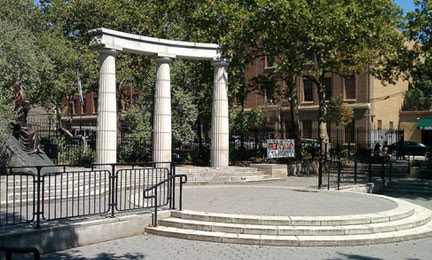
| Source: http://egodeath.com/images/egodeatharticle/HighRes/DionysusPillar_HiRes.jpg |
J. Radenkova¹, E. Saeva² and V. Saev²
1
Toxicology Clinic, Emergency Medicine Institute “N. I. P irogov” – Sofi a 2
University “La Sapienza” – Rome
Summary. Many drugs are used for their mood and perception change effects,
including those with accepted uses in medicine and psychiatry. There is archaeological
evidence for the use of psychoactive substances dating back at least
10 000 years, as well as historical data for cultural purposes in the last 5000 years.
 |
| Source: https://encrypted-tbn0.gstatic.com/images?q=tbn:ANd9GcRfoyerwfn9DQYt0Fywx4jZDlcy9saTGI_WkeQu9nbzq44OSqrpYQ |
Some psychoactives, particularly hallucinogens, have been used for religious purposes
since prehistoric times. Examples of traditional entheogens include: kykeon,
ambrosia, iboga, soma, peyote, ayahuasca. Other traditional entheogens include
cannabis, ethanol, ergine, psilocybe mushrooms, opium. Although entheogens are
taboo and most of them are offi cially banned in Christian and Islamic societies, their
ubiquity and importance in terms of different spiritual traditions of other cultures is
unquestioned.
Key words: psychoactive substances, drugs, entheogens, hallucinogens
Many drugs are used for their mood and perception change effects, including
those with accepted uses in medicine and psychiatry. Classes
of drugs frequently used recreationally include: stimulants, hallucinogens,
hypnotics, analgesics [16].
There is archaeological evidence for the use of
psychoactive substances dating back at least 10 000 years, as well as historical
data for cultural purposes in the last 5000 years [14]. Some psychoactives, particularly
hallucinogens, have been used for religious purposes since prehistoric times.
There is speculation that hallucinogenic mushrooms and cacti, heavily infl uenced
the major religions of India, Americas, Middle East and Europe, including
Christianity [9, 17].
Entheogen in the narrow sense, is the psychoactive substance
used in psychotherapy, religious, spiritual or shamanic context. The term is derived
from two words of ancient Greek, (entheos) and (genesthai). The literal meaning of
the word entheogen is “that which causes God to be within an individual”. Histori-
122 Psychoactive substances in different...
Acta Medica Bulgarica, Vol. XXXVIII, 2011, № 1 123
cally, entheogens are mostly derived from plant sources and were used in various
traditional religious contexts.
Examples of traditional entheogens include: kykeon, ambrosia, iboga, soma,
peyote, ayahuasca. Other traditional entheogens include cannabis, ethanol, ergine,
psilocybe mushrooms, opium [9, 22, 23].
Kykeon is Greek and drinks that are used in the Eleusinian mysteries - the
opening ceremony of the cult of Demeter and Persephone. Kykeon is mentioned in
the texts of Homer “Iliad”, and is described as consisting of barley, water, herbs and
ground goat cheese. In an attempt to solve the mystery of how many people over
a period of two millennia could constantly try revelations, during the climax of the
ceremony of the Eleusinian Mysteries, it is postulated that the barley used in the
Eleusinian kykeon is parasitized by ergot and that the psychoactive properties of
fungi lead to strong experience mentioned by participants in Eleusis [15].
Ergot
– Claviceps purpurea is a parasitic fungus that occurs in some grasses
and cereals, mostly rye. In the class of infected rye grains instead appear purple
cells in the form of horn, hence the name of the fungus. Ergot contains psychoactive
alkaloids (ergotamine) and in larger doses is toxic to humans (ergotism). Since
then it gets styptic drug that is used in medicine.
While doing experiments with ergot, looking styptic, the Swiss chemist Albert
Hofmann discovered the psychoactive properties of the alkaloid ergotamine [10]
and shortly thereafter synthesized LSD.
Albert Hofmann, with Uosan and Rukh, substantiate the hypothesis that the
sacred drink in ancient Eleusinian Mysteries (kyukeon) contained barley or rye infected
with ergo, which had caused hallucinations in dedicate to Mystery.
In the Middle Ages, there are known outbreaks among humans and animals
caused by bread made with ergot-infected grain. They are called “Fire of St. Anthony”
or “Holy Fire (ignis sacer)” – now called ergotism.
Delphic oracle was founded eight centuries BC and is the most popular and
renowned in antiquity holy place in the Mediterranean. This is best documented
religious site of the classical Greek world [11]. Pythia is the name of any prophetpriestess
of the god Apollo in his sanctuary at Delphi, located at the foot of Mount
Parnassus. When giving predictions Pythia sat on the tripod of Apollo in the temple,
chewed bay leaves, fell into a trance, sent by Apollo, and in this state gave predictions
of who came to inquire of God. Since speech was incomprehensible and
unrelated, her words were interpreted by special priests.
There is a hypothesis that the prophet-priestess of the god Apollo used hallucinogenic
substances, most likely plant which produced the visions – cannabis,
opium or daydream. According to another hypothesis, a tripod was ground fi ssure
from which emerged intoxicating gases – nitrous oxide, or ethylene that induced
a state of trance.
Among the most famous ancient writers who speak for the sanctuary of Apollo
at Delphi are Pindar, Herodotus, Aeschylus, Sophocles, Euripides, Plato, Aristotle,
Diodorus, Strabo, Pausanias, Plutarch, Livy, Ovid, Luke, Julian, Justin [11].
Soma or Haoma was a ritual drink of importance among the early Indo-Iranians,
and later and greater Persian Vedic cultures [2]. The active ingredient of Soma
is presumed by some to be ephedrine, an alkaloid with stimulant and (somewhat
debatable) entheogenic properties derived from the soma plant, identifi ed as Ephedra
pachyclada). However, there are also arguments to suggest that Soma could
have also been Syrian Rue, Cannabis, Belladonna or some combination of any of
the above plants. In the Vedas, Soma is portrayed as sacred and as a god. The
god, the drink and the plant refer to the same entity. Two holy drinks exist: Soma for
the immortal soul and Amrita for the immortal body. In this aspect, Amrita is similar
to the Greek ambrosia; both are what the gods drink, and what made them deities.
Indra and Agni are portrayed as consuming Soma in copious quantities. The consumption
of Soma by human beings, as attested in Vedic ritual, probably results
from the belief that it bestows divine qualities on them [20, 21].
Entheogens have played a key role in the spiritual practices of American culture
for millennia [5, 6]. Not one of the cacti of the New World has psychoactive
properties, but arguably the most famous among them is Lophophora williamsii
[18]. This cactus, called by locals meskal or peyote (more accurate peyotl) semi
deserts grows from central Mexico to the Rio Grande River. There is archaeological
evidence that it was known to the locals at least before 8000 and because of its
particular properties it has for centuries played an important role in religious beliefs
and rituals. Since 1620 this plant was condemned by the Inquisition as contrary to
the purity and integrity of the holy Catholic faith.
However, there is a large group of people who continue to use peyote in a traditional
manner. Over the 19-th century, its cult spread among the Indian tribes north
of the Rio Grande and soon conquered the Great Plains purposes. This cult united
traditional shamanism to Christianity, according to Indian Christian God is the same
with the Great Spirit who created the world and left a piece of peyote in its power,
and Jesus is the man who gave the people this plant. Peyote was used in Saturday’s
gathering in traditional tents, where the Indians under its infl uence prayed and sang
in the morning ceremony which ended with a common breakfast. Core values of this
religion are brotherly love, care, self-denial and plenty of alcohol.
In 1918, its followers were united to resist persecution and founded the American
Church Indigenous (Native American Church), which today has around 250,000
followers, i.e. one third of all Indians in the U.S. The organization has managed to
resist the attempts use of peyote to be outlawed and by a 1970 act of Congress it
was offi cially legalized as part of the ritual.
Peyote quickly became known in Europe and many scientists and intellectuals
were captivated by its ability to immerse the individual in another reality. Peyote
opened the doors of perception – that is the title of Aldous Huxley’s book dedicated
to his experiences under the infl uence of mescaline.
Along with the psychological research the effective start of peyote was actively
sought. In 1900 it was already known that this is an alkaloid called mescaline
– colorless oil, soluble in water, alcohol and chloroform.
124 Psychoactive substances in different...
Acta Medica Bulgarica, Vol. XXXVIII, 2011, № 1 125
The structure of mescaline was established with certainty only after Shpet in
1919 managed to synthesize it in a chemical laboratory. It has been isolated from
peyote and other alkaloids, e.g. lofoforin which has strychnine similar properties. Although
to a lesser extent, they also contribute to the general effect of peyote. As of
1925 all that could be known about peyote and mescaline was known; today mescaline
and LSD have become standard for hallucinogenic substances [26, 31].
Indigenous peoples of South America used a wide variety of entheogens.
Prominent example is ayahuasca [7]. Dimethyltryptamine containing ayahuasca
is used primarily as a religious sacrament. Those whose usage of ayahuasca
is performed in non-traditional contexts often align with the philosophy and cosmologies,
associated with ayahuasca shamanism, as practiced among indigenous
peoples such as the Peruvian Amazon Urarina. Ayahuaska is referred to as nectar
of the gods. It has strong hallucinogenic properties, but is signifi cantly softer than
pure DMT, mainly due to lower concentration. “Spiritual experiences” are also characteristic
of ayauaska.
Iboga tree is the main pillar of the religion practiced Bwiti in West Central
Africa, mainly Gabon, Cameroon and Congo, which use alkaloid containing plant
roots in a number of ceremonies [5, 7].
Iboga is taken in large doses by initiates when entering the religion, and is
regularly eaten in smaller doses associated with rituals and tribal dances, usually
performed at night. Bwitists were subject to persecution by Catholic missionaries and
today are totally opposed to the growing religious movement of Bwiti. Leon M’ba,
before becoming the fi rst president of Gabon since 1960, protected religion Bwiti and
use of iboga in French colonial courts. Council of Ministers of the Republic of Gabon
announced Tabernanthe iboga that is a national treasure on June 6, 2000.
At lower doses Iboga has a stimulant effect and is used to maintain vigilance
in hunting. The best-known entheogen using culture of Africa is Bwitists, using detergent
based peel Iboga (Tabernanthe iboga) [7].
One of the most widely used entheogens is cannabis which was used in
China, Europe and India, and in some cases for thousands of years. It also appeared
as part of religions and cultures, such as movement Rastafari, of Sadhus of
Hinduism, the Scythians, Sufi Islam, and others [3].
Cannabis has an ancient history of ritual use as an aid to cross and is traditionally
used in religious context throughout the Old World. Herodotus wrote about the
early ceremonial practices by the Scythians, who are considered to have occurred
from 5-th to 2-nd century BC. Early Greek history and modern archaeology indicate
that the peoples of Central Asia have been using cannabis 2500 years ago [3, 14].
Cannabis or ganja is associated with the worship of Hindu deity Shiva, who
is popular as he considered that plant hemp. Bhang to Shiva offers images, especially
the festival Shivratri. This practice is particularly witnessed in the temples of
Benares, Baidynath and Tarakeswar [20, 21].
Early Christians used cannabis oil for medicinal purposes and as part of baptism
to confi rm the forgiveness of sins and “right of passage” into the Kingdom
of Heaven [1]. According to the Living Torah, cannabis was an ingredient of holy
anointing oil mentioned in various sacred Hebrew texts [7, 12]. The herb of interest
is best known as kaneh-bosm (Hebrew). This is mentioned several times in the Old
Testament as a bartering material, incense, and a component of the holy anointing
oil used by the high priest of the temple [12].
In ancient Germanic culture cannabis is linked to the German love goddess
Freya. The collection of works is associated with an erotic high festival. It was believed
that Freya lived as a fertile force in the female fl owers of the plant and the
ingestion made one affected by this divine force.
Ethanol is a powerful psychoactive substance and one of the oldest recreational
drugs.
Alcohol is oldest and still most common substance that causes relaxation,
excitement or anger. Archaeological evidence suggests that the vine was
domesticated by man with corn around 6000 BC and that all civilizations of the
ancient world – Egypt, Greece, Rome, knew alcohol – mainly beer and wine [13].
When the Indo-Europeans reached the world of the Caucasus and the Aegean,
they encountered wine, the entheogen of Dionysus, who brought it with him
from his birthplace in the mythical Nysa, when he returned to claim his Olympian
birthright.
Dionysus is the god of wine and sexual orgies. He was accompanied by
maenads and satires - people with goat feet. Their leader is Pan, the god of
fl ocks.
The Nordic nations also had their own alcoholic beverages. Germans and
Slavs drank mead – “medovina”, steppe peoples - fermented milk – “koumiss” and
Chinese people drank brewed from fermented rice.
Islam strictly forbids alcohol, but despite the bad treatment of it, namely the
Arab alchemists were the fi rst to receive it in pure form. They believed that distillation
reached the soul of intoxicating drinks.
Alcohol has gained popularity among the masses only in the 16th century,
when it became cheaper and pubs everywhere started springing up.
The indigenous peoples of Siberia (from which the term shaman has been
attached) used fl y mushroom Bride (Bride muscaria) as an entheogen. Ancient
inebriant Soma, mentioned frequently in the Vedas, seems to be consistent with the
effects of an entheogen. The active ingredient in Soma is supposed by some to be
ephedrine, an alkaloid with stimulant and (less controversial) entheogenic properties
arising from the Soma plant, identifi ed as pachyclada Ephedra [2]. However,
there are arguments to show that Soma may have been Syrian Rue, cannabis,
Belladonna, or any combination of the above plants.
The muscimol containing in Amanita mushroom has been used for ritual purposes
in prehistoric Europe. Sponge itself ingested in minimum quantities, in most
cases is not fatal, but serious poisoning is common when mistaken for the bride,
126 Psychoactive substances in different...
Acta Medica Bulgarica, Vol. XXXVIII, 2011, № 1 127
if these quantities are large. Some people had consumed it in certain quantities to
get hallucination – in the role of a substance causing visions it is especially known
for the rite of the Vikings and Siberian shamans. There are assumptions that it was
sacred mushroom in early Christianity. Similarly fl ying sponge is dedicated to Odin,
the god of ecstasy and henbane stood under the dominion of the thunder god –
Thor in Germanic mythology – and Jupiter among the Romans [28].
Mushrooms have a particular role in the mythology of almost all nations
thought that they are children of thunder or being reborn phallus of the dead men,
in all cases the magical powers of mushrooms – good or bad – are not questioned.
If the religions of ancient mushrooms were overshadowed by other plants in Siberia,
their use until recently was preserved in its original form. All European explorers
turned their attention to the role of exclusive in shamanic rituals fl yagaric. To fall
into a trance, shamans drank a drink made from fl y agaric; furthermore, fl y agaric
used ordinary people, apparently to experience unusual feeling. Before alcohol
was brought by the Europeans, the sponge was popular entertainment among certain
peoples in Northeast Asia.
Many authors believe that the popular in medieval Scandinavia berserk owes
its fame to fl yagaric. Berserk means man-bear, so they called the people who suffered
particular state with a drink made from fl y agaric. The drink is usually used
before battle and by those soldiers who get into a rampage and fury, causing the
enemy holy terror. After the battle they took several days for recovery [25, 30].
Hallucinogenic Psilocybe was known to the aboriginal Mexicans as teonanácatl
(“divine mushroom”) and became served at the coronation of Montezuma
II in 1502. After the Spanish conquest of the Americas, the use of hallucinogenic
plants and fungi, and other pre-Christian traditions, were forcibly suppressed and
driven underground [5, 8].
The seeds of several tropical vines have long been used by Indians in Mexico
for ritual purposes. All of these vines belong to the family Convolvulaceae.
The active substance is contained in the seeds, they are ground, soaked in
water, water fi lter and drink, but the godless that do not hold the ritual, simply
chewed.
The group of natural products belong deliriants used since the dawn of human
civilization as a healing and “magic” tools (belladonna, mandragora, datura,
reverie). Later many chemical compounds were synthesized in their likeness, some
of which are among the most active known psychoactive substances [4, 29].
Drugs containing deliriants of this kind have a long history of use. Aztecs
used them for rituals in the Temple of the Sun. Shamans of the Peruvian Indians
practiced sacred datura for dedication to youth in the mysteries of the spirit world.
Prophet of the temple of Apollo at Delphi used small doses datura, before making
their predictions. Homer mentions datura in their epic Odyssey. The priests of the
ancient Thracians on our lands used deliriants in his ceremonies. Seeds and leaves
of Datura were added to ganja (cannabis) in India to obtain additional mental health
effects of smoking. In India, trance then drugged with delirianti was part of cult ritual
human sacrifi ces in honor of the goddess Kali.
Deliriants are associated with Western history, especially in the period 15th
- 17th century. This is the era of witches and their fanatical persecutors of Holy
Church. Witchcraft can be seen as a continuation of ancient pagan traditions, resurrected
in the form of a peculiar social and religious rebellion. Which is drugged by
deliriants of “magic” herbs (belladonna, mandragora, datura) specially prepared in
various forms – ointments, powders, potions? It is known that the active alkaloids –
atropine, hioscyamin, scopolamine, can penetrate the skin and affect the body.
From ancient times Mandragora is considered an aphrodisiac. This property
was noted in the Old Testament, which describes how after its impact Rachel and
Leah became pregnant and had children.
Fame and a means exciting amorous desires, has been sung by many ancient
and medieval authors.
Mandragora is often mentioned by Shakespeare, the play is
another example of Mandragora Niccolo Machiavelli.
Such fame had another plants of the same family that grow in Central and
Northern Europe. Among them, most familiar are Scopolia carniolica, Arch of the
door (Atropa belladonna), Datura Stramonium and Day dream (Hyosciamus niger).
The name of the plant – “Day dream”, speaks well for its psychoactive properties.
The name of the Bella donna (beautiful woman) came from glory and vehicles
for embellishment as due to its impact pupils wide by open and eyes look very shiny
and black. Its other name by which it is known in this country is crazy ticket – hardly
need to explain why. Linking all these plants with the release of sexual forces make
them a natural component of ointments, used by witches. Many medieval women
who experienced the impact of the plants remained with the fi rm conviction that
they actually fl ew and communicated with spirits. There was a widespread belief
that the ointments of the witches could turn people into an animal, usually a wolf,
this conversion was called by medieval scholars likantropiya.
In many places in Europe, including Bulgaria, North America and Asia, there
are drugs with properties of deliriant – Datura Stramonium. Intoxication cause
contained in the plant alkaloids – atropine, 1-hioscyamin, scopolamine. There are
known about 15-20 species Datura with suffi cient content of alkaloids to induce
strong psychoactive effects in the world.
In the books by Carlos Castaneda, there is a detailed description of the use
of such ointments obtained from Indian datura (Datura inoxia). Don Juan, Castaneda’s
teacher, not an isolated case – wizards and priests of many nations often use
them to get into a condition suitable for communication with the spirit world.
The priests of the ancient Thracians also have used similar means to reach
divine madness.
Drink from datura was used in India by followers of Kali, who fall into trance
and expressed tribute to the goddess in the usual way for their sect, killing many
people. Although rare, some of these plants are used to induce a kind of pleasure;
128 Psychoactive substances in different...
Acta Medica Bulgarica, Vol. XXXVIII, 2011, № 1 129
normally used is datura as the most widespread. The report of the Indian hemp
Commission says that cannabis is sometimes mixed after with leaves of datura and
an Indian smoking mixture that person falls into a special kind of delirium, in which
“throws his clothes and saw horrible things, like snakes, scorpions and so etc.”
Datura leaves smoked some Arab tribes [4].
Cultivation of Opium poppies for food, anesthesia, and ritual purposes dates
back to at least the Neolithic (New Stone) Age. In Sumerian, Assyrian, Egyptian,
Indian, Minoan, Greek, Latin, Persian and Arab Empires each made widespread
use of opium, which is the most powerful form of pain relief then available, allowing
ancient surgeons to perform prolonged surgical procedures.
Opium is mentioned in the most important medical texts of the ancient world,
including the Ebers Papyrus and the writings of Dioskorid, Galen and Avicenna.
Widespread medical use of unprocessed opium continued through the American
Civil War before giving way to morphine and its successors, which can be
injected at a precisely controlled dosage [19, 27].
CONCLUSION
Entheogens have been used in ritualized context for thousands of years, their
religious signifi cance is well established in anthropological and contemporary evidence.
Entheogens have been used in various ways, including as part of the established
religions, secularly for personal spiritual development as a tool (or “plant
teachers”) to enhance the mind, secularly as recreational drugs, and for medical
and therapeutic purposes. The use of entheogens in human culture and tradition is
nearly ubiquitous throughout recorded history.
Although entheogens are taboo and most of them are offi cially banned in
Christian and Islamic societies, their ubiquity and importance in terms of different
spiritual traditions of other cultures is unquestioned.
REFERENCES
1. B a r n e t t , R. E. The Presumption of Liberty and the Public Interest: Medical Marijuana and Fundamental
Rights. 2007.
2. B o t a n y of Haoma. – In: Encyclopedia Iranica. N. Y., Columbia University, 2007.
3. H o f f m a n , M., C. Ruck et B. Staples. Conjuring eden: art and the entheogenic. vision of paradise.
– Entheos, 2001, № 1, 13-50.
4. C e l d r á n , J. et C. Ruck daturas for the virgin. – Entheos, 1, 2002, № 2, 49-74.
5. D í a z , J. L. Ethnopharmacology of sacred psychoactive plants used by the Indians of Mexico. –
Ann. Rev. Pharmacol. Toxicol., 17, 1977, 647-675.
6. E l -S e e d i , H. R. et al. Prehistoric peyote use: alkaloid analysis and radiocarbon dating of archaeological
specimens of Lophophora from Texas. – J. Ethnopharmacol., 101, 2005, № 1-3,
238-242.
7. F e r n a n d e z , J. W. An Ethnography of the Religious Imagination in Africa, Princeton, Princeton
University Press, 1982, 731 p.
8. G r i f f i t h s , R. R. et al. Psilocybin can occasion mystical-type experiences having substantial and
sustained personal meaning and spiritual signifi cance. – J. Psychopharmacol., 187, 2006, 268.
9. H a l l , A. Entheogens and the origins of religion. – Psychoactive drug, 2007, Nerdshit.com
10. Hofmann, A., Use of LSD in Psychiatry. – In: LSD, My Problem Child. Chapter 4. New York,
McGraw-Hill Book Company, 1980.
11. R o a c h , J. Delphic oracle’s lips may have been loosened by gas vapors. – Nat. Geographic
News, 2001-08-14.
12. K a p l a n , A. The Living Torah. New York, 1981, 442.
13. Medline Plus. Medical Encyclopedia: Alcohol Use.
14. M e r l i n , M. D. Archaeological Evidence for the tradition of psychoactive plant use in the Old
world. – Economic Botany, 57, 2003, № 3, 295–323.
15. “Mixing the Kykeon”, ELEUSIS. – J. Psychoactive Plants Comp., New Series 4, 2000.
16. N e u r o s c i e n c e of PAS use and dependence. Geneva, WHO, 2007.
17. P a h n k e , W. N. Drugs and mysticism. – Int. J. Parapsychol., 8, 1966, № 2, 295-313.
18. Prehistoric peyote use: alkaloid analysis and radiocarbon dating of archaeological specimens
of Lophophora from Texas. – J. Ethnopharmacol., 101, 2005, № 1-3, 238–242.
19. R a m D a s s : Longtime Spiritual Leader, Opponent of the “War on Drugs”. 2004-03-08. www.
drogpolicy.org
20. Social and Religious Customs. – In: Report of the Indian Hemp Drugs Commission. Chapter IX.
Simla, India, Government Central Printing House, 1894.
21. R i c h t e r -U s h a n a s , E. The Indus script and the Ṛig-Veda. Bremen, 2001.
22. R o b e r t s , T. B. Chemical Input, Religious Output – Entheogens. (Chapter 10) – In: Where God
and Science Meet: Vol. 3: The Psychology of Religious Experience. Westport, CT, Praeger/Greenwood,
2006.
23. R o b e r t s , T. B. (ed.). Psychoactive Sacramentals: Essays on Entheogens and Religion. San
Francisco, Council on Spiritual Practices, 2001.
24. S a m o r i n i , G. Traditional use of psychoactive mushrooms in Ivory Coast. – Eleusis, 1995,
№ 1, 22-27.
25. S a m o r i n i , G. The mushroom-trees in christian art. – Eleusis, 1998, № 1, 87-108.
26. S t a f f o r d , P. Psychedelics. Oakland, California, Ronin Publishing, 2003.
27. U N World Drug Report 2007 – Afghanistan.
28. Ve t u l a n i , J. Psychoactive substances in the past and presence. – Pol.J. Pharmacol., 53, 2001,
№ 3, 201-214.
29. V i z i , S. Drugs of Abuse – The Myth of Creativity and the Reality of Destruction. Cambridge, Cambridge
University Press, 2007, 241-256.
30. Wa s s o n , R. G. The Wondrous Mushroom: Mycolatry in Mesoamerica. (1980). New York,
McGraw-Hill Book Co., 2007.
31. W i n k e l m a n , M. J. et B. R. Thomas (editors). Psychedelic Medicine: New Evidence for Hallucinogens
as Treatments. Westport, CT, Praeger/Greenwood, 2007.
Address for correspondence:
Julia Radenkova – Saeva, MD, PhD,
Toxicology Clinic,
Emergency Hospital “N. I. Pirogov”
Sofi a
е-mail: jrsaeva2@yahoo.co.uk
130
Source: http://egodeath.com/images/egodeatharticle/HighRes/DionysusPillar_HiRes.jpg
 Source: https://www.puntmagicbarcelona.com/sites/default/files/puntmagicbarcelona/mandragora.jpg