Today, medicine is supposed to do the same with eugenics, but for the well-being and survival of the fetus and the mother, though in the case of some experiments, ethical questions arise and leaders of various religions object such interventions. We live in times, when geneticists, such as the Cypriot Nicholas Zavos and the Italian Severino Antinori, announce that the first human clone will be born in January 2003. Such a delicate issue is also fetal conditioning. But before fetal conditioning, what were the origins of fetal psychology?
a. Origins of Fetal Psychology
Far before the behaviorists and the advanced neurocognitive and embryological research, the famous psychoanalyst Otto Rank, in his
, spoke first about fetal memory, fetal learning, and fetal trauma, as he accepted full human identity and enough intellectual and psychological functions for the fetus. David Winnicott, another major psychoanalyst, believed that “in full term, there is already a human being in the womb, one who that is capable of having human experiences and of accumulating a body of memories and even of organizing defensive measures to deal with traumata...” (De Mause, 1996, p.1). Winninicott even dealt with prenatal experiences in his analyses with children who had them more freshly on their subconscious. He used to take the child patient in his coat and tell it to turn upside down with the head between his legs, as in the fetal posture! (De Mause, 1996). Other psychotherapists who followed Winnicott were Fodor, Mott, Roskovsky, Janov, Grof, Verny, Fedor-Freybergh, Janus, and others. They successfully treated patients with birth feelings of being trapped, feelings of crushing head pressures, cardiac distress, death-rebirth struggles, and emotional explosions due to prenatal trauma (De Mause, 1996). Lloyd de Mause (1996) reports that 60 % of the dreams content prenatal and perinatal images as this is manifested from the professional experiences of most psychotherapists. Lynda Share pointed that “early trauma produces an overwhelming fear of all progress in life.” (De Mause, 1996, p.2).
Alessandra Piontelli, an Italian psychotherapist reported case studies, such as one on an 8-month boy who felt much psychological pain and anxiety to other’s responses, since as a fetus, he had experienced frustration with his non-responding co-twin, also a male, who was dead two weeks before birth. Piontelli has spent thousands of hours in a combination of ultrasound research and clinical psychoanalytic work and much of her findings match those of other therapists who have mentioned pre- or perinatal “Fantasies” in children (De Mause, 1996). Lloyd de Mause has reported himself traumas from children who were fetuses, while there was war. It seems that the frightening noise of crushing bombshells, the noise of the planes crossing above houses and screams and cries of agony and despair were aversive auditory stimuli that caused fear and anxiety to the same individual at an older age at a degree even of post-traumatic anxiety (De Muse, 1996).
b. Fetal Conditioning
Learning theories, such as conditioning and habituation have been applied on animal and human fetuses in medical laboratories for a long time. By definition, Fetal conditioning is the classical conditioning of the fetus in utero, which is when the fetus learns to elicit a CS (conditioned response) after an UCS (unconditioned stimulus) (Hepper, 1996), such as a tone, light, or a galvanic skin stimulus (electrical stimulation of the fetal skin).
In an experiment on Conditioned Galvanic Skin Response in the chick embryo, conducted by R.Fried and S. Gluck, from Hunter College of the City University of New York, two 14-,15-,
Habituation is a behavioral concept essential to fetal perception. Habituation is “the decrement in response to stimuli following repeated presentation of the same stimulus” (Harper, 1996). In other words, the fetus gets used to certain stimuli. Most fetal experiments use audio stimuli, unlike the newborn experiments which also use visual (Harper, 1996). That is because the fetus has not yet developed its visual functions and it is more habituated to audio stimuli. That is very important, since fetal mental representations, to use a cognitive term, memories, and experiences play an important role to later development.
c. Fetal Conditioning in Medicine
Fetal conditioning is studied in clinical medicine, in cases such as of chemical stimulation, as in Fetal Alcohol Syndrome (FAS), soap in uterus, and hormones, as well as mother’s weight loss, blood diseases, or in behavioral medicine. From the above I will prefer to discuss a more psychological issue only, such as behavioral medicine. It could be interesting to refer to a series of longitudinal studies conducted by Dr. Catherine Monk, Dr. Michael Myers, and Dr. William Fifer (2000) from the developmental psychobiology department of Columbia University. They studied both the prenatal, prenatal and post-natal (from birth to four-months) neurobehavioral characteristics of subjects, whose mother suffered from maternal anxiety or depression.
The purpose of the study was to detect a pattern of familial transmission of mental disorders, such as maternal anxiety and depression. The results showed that there were more probabilities for the children of mentally ill mothers to be affected by the same disorder, than those whose mother was not mentally ill. Fetuses and newborns of mothers with mood disorders, such as depression were more likely to alter states of mood, especially when their mothers did so (http://nypisys.cpmc.columbia.edu).
a. New Age Rituals of the Prenatal Development
It is evident that Eastern Religions, other ancient religions polytheistic in origin, and indigenous practices are currently fashionable and often reinterpreted and rediscovered in a naive and distorted consumerist context which often lead to an unhealthy and ambiguous "spirituality", often syncretistic (related to religious eclecticism or all-faith accretion) which has nothing to do with real healing and spiritual direction. There are current trends of misleading and often very dangerous neo-Pagan and New Age cults that deceive and manipulate a lot of people and especially the inexperienced and troubled youth who are looking for answers to their problems or are disappointed by organized religion or act impulsively and often join New Age cults disguised as patriotic and nationalist organizations that claim to recover ancient practices. In a post-modern and in particular deconstructionist fashion, concepts and notions get revised and too often misdefined and misrepresented in the dark world of New Age politics, such as "tribal" and "tribalism", "folklorism", "Hellenism" and many more. "Folklorism" is a dry utilitarian and naive misuse of customs and traditions which are used by subcultures and deviant groups as well as by everyday youth culture that sometimes can take elements of various respectable and legitimate ancient and indigenous cultures and conncet it with marginilized and even deviant patterns of social behavior. "Hellenism" is another misdefined word which originally means "Greekness" and Greek culture in its diachronicity and historical continuity and not exclusively "ancient Greek" or "Hellenic/Greek Pagan" or "ancient Greek religion" or "neo-Pagan revival", as unfortunately now stands for for most people. One also needs to be very careful with some groups and practitioners who combine science with superstition
).
In our post-human, post-modern and globalized world, there are places on Earth were traditional societies co-exist with science and quantitative research. It is thrilling when scientific research meets cultural studies and religion, without prejudice and taboos, not just for the favor of research, but also in the realm of religious practice. New Age cult leaders deceive their victims by claiming that this combination manifests the goals of the New Age religions. An example of merging new age ambitions and practices with traditional religious practice in situ, in the original country of the religion, is a prenatal research and ritual practice in India. Hinduism is an open-minded and highly sophisticated and spiritual religion, rich in important archetypal images, mythology, and symbols. However, New Age occultists often exploit public's interest in Hindu esotericism and spirituality and Ayuverda or Indian Medicine and take advantage of Hinduism's open-minded and holistic perspective by placing it in a distorted cheap consumerist postmodern context. Thus, they confuse their victims and give them the wrong idea about ancient and indigenous practices and they also belittle and tarnish those practices. They mix up original ancient and indigenous spirituality with New Age consumerist "spirituality" or pseudo-spirituality. New Age religious attitudes and scientific research, though India is a developing and traditionalist society and only traditional. In Hinduism, Ayurverda or Indian medicine is very ancient and it is a combination of medicine, philosophy, and cosmology as well as ecological, spiritual and religious practices often combined with herbalism, Indian Astrology and tarot (www.oodee.com; www.apologitis.com).
Gajanan S. Kelkar is the director of the “Manashakti Research Center in Lovavla, India. This institute runs the “Manashakti REST (Research Education Sanatorium Trust) New Way. Its activities are: study seminars, machine test (which assess the inner energy quanta expenditure and ways to attain that energy), publications, performance of social and cultural rituals, and outstation programs. Manashakti means “new way” in Sanskrit and the goal of the prenatal program Sanskar is to research, teach, and practice that new way. Sanskar is the Sanskrit word for “good or positive values. According to Mahabharata, the great Hindu work and source of Hindu mythology, Abhimanyu, son of Arjuna, fought for those good values the evil forces in the womb of his mother, to be later reborn. The goal of this program is to administer fetal conditioning applied in prenatal moral education. Specifically, the official goal statement is: “I. To welcome the baby with good thoughts, II. Imparting Sanskar to the fetus, III; improve the emotional health of the parents, IV; increasing the courage and confidence of mother during labor” (www.birthpsychology.com/life before/sound7.html). The tests and procedures are: “Stage I: Temperament coordination test of both parents before marriage. Stage II. Post-marriage adjustment test; Stage III: Three-day study course to be taken before or during pregnancy (preferable before conception); Stage IV: Stroboscope test for improving the concentration of the parents (during the first six months of pregnancy). Stage V: Fetuscope test”, which is recording of heart pulse rate and the monitoring of the development of the fetus’ main organs “(after six moths of pregnancy). Stage VI. Post-delivery personality test for parents” (Ibid.). The researcher who administers the tests and procedures is Swami Vijnanand. (For more information, see www.birthpsychology.com).
In America, as also in Europe, there are many nationwide New Age and neo-Pagan organizations, convents, circles, churches, community service agencies, and the like, found on the Internet, that provide information about pagan parenting, spiritual teachers, and ancient recipes for fetal and mother conditioning, though they usually do not use this term, but that is exactly what they do. Such are www.paganparenting.net and www.goddessmoon.org, just a very few samples of the inumerous popular websites on this subject. They suggest the use of incense, music, and massage for the relaxation and peace of mind of both mother and the fetus. Many such societies reconstruct and practice rituals for the fetus and range from Druid/Celtic, Wicca, Green Magic, Earth Mother/Moon Goddess religions to neo-Gnostic/Christopagan , Greek and Roman Pagan, Phrygian/Egyptian/Chanaanite Revivals to various cults of Animism/Syncreticism/Eclecticism, and also Shamanism/Vudoon/Ayuvenda/Yuruba/Native American Religions, not to mention the New Age movements related to Sufism and Eastern religions. Christianity considers neopaganism and new Age incompatible with its doctrines and dangerous for humanity and its salvation (
b. Couvade
Beliefs that maternal anxiety and depression, especially postpartum, are maternal problems or other similar environmental factors (quarrels, noise, depressive environment, father’s or relatives aggressive attitude towards the mother) that may affect the fetus’ psyche, are not only western, though traditional societies may have not been aware of such scientific concepts. Yet, have they felt them in everyday life and dealt with them in their traditional shamanistic, animistic, or transcendental way through rituals and religious ceremonies of purification, exoneration, and evocation of the spirits.
Some cultures practice couvade, French word for “hatch”, in which father expects on his bed very specific taboos of the prenatal development, shortly before birth. What is not pointed much by
couvade researchers is that it is a practice of “fetal conditioning”, as the expectant father not only deals with his own situation toward the pregnancy phenomenon, but also “purifies” and “exonerates” the evil spirits that posses the fetus for the fetus’ well-being and its future luck. Such couvade practicing culture is the Arapesh of New Guinea, who interprets childbearing as a heavy burden and drain of energy for both mother and father. The main purpose of couvade is to have the father “distract the attention of the evil spirits so that the mother and the baby can easily go through the childbearing transition , more safely” (Helman, 1990, Newman & Newman, 2003, p.124). Other cultures, such as the Thai were studied. A study conducted by Knonobdee, C. et al (1993), observed 179 Thai males whose symptoms were very similar to what many American and European males have experienced (www.childbirth.com). Couvade is not just a traditional practice after all. It derives from the same motives that other expectant fathers in western societies have, then they naturally feel the tendency to observe their partner’s belly and appear symptoms of general fatigue, stomach cramps, dizziness, or backache, exactly as those the couvade fathers experience. According to H. Klein, symptoms often appear from the end of the first trimester to culminate in the end of pregnancy, and disappear after birth (Klein, 1991, Newman & Newman, 2003).
The expectant father’s crisis in couvade is eloquently explained by M. Finley, who presents him as a confused and anxious human being who finds himself “at the bottom of a barrel of his manhood” facing the unknown and his only weapon is his faith. Finley (1984) correctly observes that both the ancient and the modern man are quite alike as they both “value their security” and “they are both threatened when their manly armor starts to crack.” Trethowan (1972), the first to document and talk about couvade, suggested that the pregnant wife’s physical appearance causes those symptoms which are products of man’s emotional ambivalence toward his partner’s pregnancy. He tries to empathize with his wife’s pregnancy and thus he identifies himself with her. As Newman & Newman (2003) shrewdly pointed out, that many unexpressed unconscious feelings of the expectant father are amplified in his conscious worries about his wife’s and his child’s health and security and the produce stress might be what causes the couvade syndrome, as Newman & Newman call it. They also pointed that an unconscious envy of the expectant father for his wife’s pregnancy might be a crucial factor that intrapsychic conflict, which sounds very Karen Horney’s kind of thinking, who spoke of men’s womb envy (Fadiman & Frager, 2002). However, this concept is not mentioned by Newman & Newman, and we do not know whether the authors were influenced by her theory or their opinions accidentally match with hers and of other feminist psychologists.
c. Other Reactions to and Rituals of Prenatal Development in non-Western Societies
Besides the unconscious reverence that some men may have for childbearing, conscious appreciation of this miracle of life exist in both the western and the non-western world, but are more explicitly expressed in the non-western traditional societies through rituals and formal practices. Thus, in many such societies, women are considered blessed, chosen, or even magic, and thus they are respected by their community. In Jamaica, the nana, or midwife, serves also as a spiritual advisor for the pregnant women and of course she is key figure in Jamaican society. Her rituals during pregnancy and the first 9 months of childbirth are not only to purify the woman from the evil spirit and prepare her psychologically and spiritually, but also does a kind of fetal conditioning, of course unaware of its scientific concept (Kitzinger, 1982 - Newman & Newman, 2003).
 |
| Arapesh of New Guinea |
On the other side of the coin, in some other traditional societies, such as the Arapesh of New Guinea, which are already mentioned, or the Kadu Gollas of India and the Vietnamese villagers, the pregnant withdraws from the village, while the Cuna Indians view pregnancy as a sickness (Newman & Newman, 2003). This withdrawal, besides the psychosocial needs of both the woman and the community, might also have some demonological character, since evil spirit may be supposed to possess both mother and fetus. As a result, withdrawal may serve as a prescription generally as a purification or preventive ritual and specifically as a kind of fetal conditioning, since the isolated environment, the lack of audio stimulus, such as talking may affect fetus. Mother’s feelings of loneliness, frustration and isolation may also affect the fetus.
d. Ancient Rituals and Symbols of Prenatal Development
We have discussed about existing societies and now it is time to go back in time, in a reverse way than it usually happens, but this is also the journey the modern man has to take, to go back to his roots and discover the origins of humanity and finally of his own self. We mentioned the positive and negative tendencies toward prenatal development and childbearing among various non-Western societies. Besides the non-Western world, the ancient western world is quite interesting and spiritual and many of its symbols, mentalities, and rituals match with non-western, as both traditional and un-standardized, unlike the standardized modern world of globalization and technocracy.
 |
| Aegean steatopygous figurines |
 |
Marija Gimbutas |
 |
| The Minoan Snake Goddess of Crete |
From the down of civilization, from prehistory, the image of pregnancy took a magic character, as the image of the pregnant goddess persists in many unearthed artifacts from the western (Greece: Neolithic cultures of the mainland; Balkans: Vinça, Cucuteni, and Karanovo cultures) and non-Western (Mesopotamia, India) worlds. The study of archaeomythology, or the mythological research in ancient art and archaeology is best represented from the work of a unique woman, Marija Gimbutas. Marija Gimbutas was a great archaeologist and archaeomythologist who was connected to the work of Joseph Campbell, the great mythologist and cultural researcher, and immersed in Carl Jung’s theories of symbols and archetypes, which we will explain in later section. Gimbutas in her books Gods and Goddesses of Old Europe and the Language of the Goddess, she saw that Neolithic Balkan and Greek artifacts indicated a reverence and sense of divinity for the pregnant woman, as it is expressed in steatopygus figurines, or figurines which emphasized the protruding waist and the blown belly (Gimbutas, 1989 and Gimbutas, 1974). Long or many breasts on female figurines and the image of the mistress of the animals, a symbol of fertility and an indication of a metaphysical fear were dominant in both western and oriental cultures of the ancient world (Ibid). The Minoan (prehistoric Cretan) snake goddess, Eilethyia or the original image of mother Earth or Gaia and Artemis, the goddess of hunting and nature, is a symbol of fertility, as is the snake, a universal symbol of fertility, primitive and wild instincts of preservation and metaphysical fear, thus an apotropaic image (Giimbutas, 1989, Burkert, 1977, Campbell, 1974, and Gimbutas, 1974). Images of the mighty goddess are such as Tara in Buddhism (Campbell, 1974).
 |
| Aegean fresco |
.bmp) |
| Idean Cave in Crete: Zeus' cave |
The egg symbol that appears in Greece and the Balkans, but probably in non-western places of the world as well, is a symbol of germination, gestation and prenatal development and resembles the theory of panspermia, or the theory that the primordial substance of the world was a seed that infinitely spread and multiplied. The image of the fetus was also found in rock art, cave painting, and figurine sculpture. The multiplied eggs, a symbol of gestation and cell multiplication, converges
with the symbols of the spiral and the meander, whose unfolding lines resemble the regenerating course of life, which as the DNA strand does, it unfolds and develops in a spiral, spreading, and multiplying fashion. Prehistoric birth shrines in Greek caves may also indicate a worshiping of the fetus and the newborn, as well as, of the mother or they were just considered vehicles of that miraculous and divine process (Gimboutas, 1989).
 |
| Cycladic steatopygous fertility figurine |
Besides, the celebrating and positive sense of the symbol of the fetus, it represented the transition from death to life and for this reason, in many cultures, from Mesoamerica to the prehistoric civilization of the Greek island-complex of the Cyclades and the Homeric Age of Greece, the dead was buried in a fetus position (Burkert, 1977). In Greek after-life mythology, Hades or after life was a personified deity, but also the underworld, a surrealist dark world, a resemblance of womb (Burkert, 1977). Similar was the after-life in the Aztec and Mayan mythologies, a journey to a dark, humid netherland (Coe, 1962), a resemblance to the womb, the liquid, humid, dark environment of the amniotic sack. The fertility goddesses and mighty goddesses which accompanied the fetal images were also ladies of death and life, fear and beauty (Gimbutas, 1989).
 |
| Hemenaios |
 |
| sernikovotano |
In Classical Greece, there were many deities of prenatal development and birth, such as Hymenaios (god of wedding and conception) who blessed and guided the wedding ceremony or hieros gamos (sacred wedding) and Leto (goddess of nursing and childbearing), not to mention Hera, goddess of mating and family, and Zeus’ wife, and Hestia, goddess of the house, in a general sense and household (Berkert, 1977). The power of those deities was supposed to be associated with lifestyles and foods, such as walnuts and herbs. A similar herb is the so-called
sernikovotano or the “male herb”, which was and is still used in the Greek provinces as the magic or healthy nutrient that is supposed to affect or alter the sex determination process in prenatal development and causes childbearing of a male child. The concept of divine and magic food or simply healthy reminds us common beliefs and practices in Hinduism. In the wedding, the newly married couple should eat a pastry in shape of placenta, called placus (Venizelos, 1873), from which the Latin word placenta derives! This ritual of fertility served also for good luck in the fetal development and, as I would suggest, had an a priori shamanistic character of fetal conditioning that goes beyond the modern conventional concept of conditioning, applied even before conception, since the couple had to dance, drink from the same cup a lot of red wine (resemblance of the Dionysian orgiastic sense and even a resemblance of blood, the red life-giving power!?) and eat the wedding cake. In a way the divine powers of Hymenaios would be put to work in the wife’s womb.
Yet, even if we accept that all the idea of those rituals was a self-fulfilling prophesy, in other words a make-belief play, then we may speak of a behaviorist fashion of conditioning, since the bride may have conditioned herself to the idea of getting pregnant and thus she models her behavior in a way that will lead her to bed with her groom and then to pregnancy. Now, for the “male herb”, if behind the myth, there is also even the slightest bite of truth, then it could be explained, in my opinion, as the classical conditioning of sex determination, though it is hard to explain how, but I am sure that what happens in psychosomatic medicine and the conversion and somatoform diseases happens also and in this kind of cases. Psychodynamic (unconscious) and cognitive (schemata and mental representations) theories could also explain such phenomena. Finally, the wedding cake and the drinking from the same cup are customs still occurring in the reception parties of our modern western society and such a similarity suggests an assimilation of the pagan customs in the Christian world, but at the same time similar images and symbols derive from the universal intellectual capabilities of humanity.
e. Theories of Interpretation: combining different perspectives
 |
| Jung and one of the mandala he painted |
In a previous section, we saw how the modern western society and how psychology and science has dealt with fetal psychological traumas. One name that was not mentioned was Jung and that because he did not really dealt that much with early development. He was more preoccupied with adult development and that is what gave him more credit. However, we cannot discuss symbols and archetypes if we do not mention Jung. “The universal intellectual capability of humanity”, mentioned above, is what Jung thought to content the
collective unconscious or that area of unconscious that is biologically rooted, as individual unconscious was meant by Freud to be. The collective unconscious “as the ancestral heritage of probabilities of representation, is not individual, but common to all men, and perhaps even to all animals, and is the true basis of the individual psyche” (Jung, 1983). It pertains all the shared culturally transmitted information that emerges in dreams, visions, peak and psychedelic experiences (to use a transpersonal terminology), mind trips, and the so-called occult phenomena, such as telepathy, and ESP (extra-sensory perception), or in other weird situations, such as in our case, the lapses of prenatal memories and traumas in children and adults.
The power of the collective unconscious and the archetypes is best manifested that two or more people share such experiences, when those people have not met or they are not aware of the process. Such collective unconscious procedures may take place in all fashions and manifestations of fetal conditioning that we have examined here. Another useful concept of Jungian theories is the archetypes or “typical forms of behavior which, once they become conscious , naturally present themselves as ideas or images, like everything else that becomes a content of consciousness” (Jung, 1983). Jung believed that
archetypes are biologically rooted, but they are not inborn ideas, as many people may fall to that trap (Jung, 1983).
 |
Cycladic Steatopygus figurines and
egg shaped sacred sculpture
as a fertility symbolism in prehistoric art |
An interesting archetype here is the divine infant, since Jung did not talk about any fetus archetype. Yet, the idea of cosmological order in the theory of the archetypes is the master-key to unlock the many different doors of cultures and their religions, as it contains a common denominator: the symbol of death and regeneration, symbolized in the mythic images of the mask, the egg inside the egg, the homocentric circles, the fish inside the fish, which is also the mythical image of Christ, the Christian personification of the savior who through his death he regenerated and as force of good, he defeated the evil, which is the master of death, the devil. So the fetus is the transition from death and non-existence to life and existence (Jung, 1959). All these are mythic images of the fetus, whose birth is represented in the archetype of the divine infant. As Joseph Campbell has shown, there are such mythic images, symbols, and archetypes in every culture and religion, from the West to the East, from prehistory to the present. The image of the egg, the fetus and the infant occur from the Virgin Mary (Christianity) and the Child to Krisna (Hinduism), Moses (Judaism), and even to the deities of many aboriginal cultures of tropical islands (Campbell, 1974). The image of the Madonna is a symbol of procreation which produces the divine seed/fetus/infant, and it is the assimilated and convoluted form of the prehistoric mighty goddess, or the Greek goddess Athena, who was also a virgin, but instead of giving birth to a savior, she gave birth to ideas, as she was the goddess of wisdom. So under a Jungian prism, all these cross-cultural images are projections of the same archetypes. Thus, fetal conditioning and fetal rituals are overt expressions of the human esoteric needs to identify the real object of life, the fetus, with its archetypal image, its ideal one, the absolute depiction of hope and regeneration.
 |
| Animus and Anima: Gender Archetypes |
The Freud’s and Klein’s concept of the
death instinct, as well as Maslow’s survival instinct and
self-actualization instinct (Fadiman & Frager, 2002) could interplay here in a vicious circle of life and death representations manifested in actions of changing the human condition, such as in the case of fetal conditioning and the various scientific or ritualistic interventions in the fetal development. Death instinct operations in the collectively unconscious creation of cultural and mythical images might be detected in negative representations of the self, as those of the fearsome deities, such as Kali in Hinduism or the spooky Minoan snake goddess with the bare breasts of fertility. This negative self is what Jung called the shadow. The feminine ideal imagery is the anima occurring in the collective unconscious of every man, while for the women, the male counterpart is the animus (Jung, 1983 and Jung, 1959). Human has the tendency to play God and prove to himself/herself that can handle things. The essence of that play-God game, as happens in shamanism, is the death and life transition that occurs in any change: something you lose, something you gain. The point is to lose the negative, troubled, weak, defeated self and gain a positive, peaceful, strong, heroic self.
Charlie D. Laughlin (2002) is a professor of neuroanthropology and anthropology of religion, a painter for pleasure (he has painted mandala and meditated on them), a Buddhist and Tantric practitioner, and a person who lived for many years with and closely observed the Navaho people of the American southwest. He combined his strong transpersonal and Jungian background with his religious experiences and the anthropological theory of biogenetic structuralism, which, as he wrote, has “to do with the brain, consciousness (including alternative states of consciousness) and culture. In other words, biogenetic structuralism is a kind of neuroanthropology with touches of neurophenomenology” (www.neurognosis.com). His combination of brain theory and phenomenology is much supported by Jung’s assertion that the phenomenology of the self, which manifests the conscious actions, hides unconscious forces which are biologically determined and in their collective sense, they act as biologically rooted archetypal mechanisms (Jung 1983 and Jung 1959).
 |
| Archetype of Wholeness: when animus and anima meet |
The knowledge that spontaneously springs through our neural functions is called neurognosis. Thus, all our fetal experiences are unconsciously interpreted through our neurognosis by our holistic operator of the brain, as Laughlin calls the neural component for integrating all experiences into the already existing and inherited
archetype of wholeness. In his examination of the Buddhist pictures of meditation or mandala, Laughlin wrote that some of them help us recall birth experiences and he actually implied even the fetal experiences, that reflect “the calling” of the anima. This “calling” is rooted in the cosmology that we inherit through enculturation, or the lifetime process of integrating into our self our cultural experiences. This calling of the anima may all be what happens in the collective unconscious of the couvade expectant father. Laughlin wrote that “the cosmology that people mainly carry around in our heads, is imagined and expressed by way of their culture’s stock of symbolic material in such a way that people are able to participate in their version of a symbolically pregnant mythic reality” (www.neurognosis.com).
 |
| Navajo Indians |
Laughlin delved into the Navajo mythology and found interesting representations of the anima and the animus, as in their mythical images of the “Blue Corn Girl” and the “Blue Corn Boy.” An anima mythical image of the Navajo or “the holy people” as they are called, is the “Changing Woman”, their beloved and most revered goddess, the Earth Mother (www.neurognosis.com). If for them the “Changing Woman”or the “Blue Corn Girl” and the “Blue Corn Boy” have a personal meaning, for us who see similar mythical images from different cultures melted in the same pot of the human neurognosis and collective unconscious, the meaning is transpersonal. Thus, there are two parallel cycles of meaning, the personal cycle of meaning and the transpersonal cycle of meaning (www.neurognosis.com). In the transpersonal cycle of meaning, we discover our cultural relation to the others and we understand and realize all the mythical images and symbols. Such might be couvade, shamanist practices of the nana, the egg and spiral symbolisms of the fetal position, or images of the Navajo that may ring a bell for our own personal meanings, such as meanings of our own self, which came through our own cultural experiences, let’s say the modern western experiences, and are all embodied in the archetype of wholeness.
 |
Mantra (ritual song or sound repetition) in Sanskrit inside
a mandala (meditation picture) |
The
realization (conscious) of this process is a way to explain the tendency of modern artists to primitivism and abstraction, since art, besides art, drama, music, and literature, is the most expressive way to mirror the archetypal images of human nature, and consequently of ourselves, since the visual stimuli are stronger and more imaginative. However, the fetus does not have developed visual skills and therefore most lapses of fetal experiences could more easily emerge through a combination of
mantra (meditation on sacred sounds) and mandala (meditation on psychedelic/sacred/imaginative/visual images), as Laughlin tried himself.
We discussed cognitive behaviorism in previous section, and now after merging all this body of different theories with neurognosis and neuroanthropology, I would like to connect neurognosis with neurocognition, since I think that the first is a part of the second. Neuro-cognition is a main concept of modern cognitive theory and is the study of the relationships between brain (“mind-hardware”) functions and cognitive functions (“mind-software”) (Solso, 1995). Research in neurobehavioral organization and sensory input has showed that spontaneous fetal activity appears at about eight weeks of post-menstrual age, while even after complete elimination of sensory input, by surgical lesion in both humans and animals has shown no effect in normal spontaneous movement, specially of the leg (Michel & Moore, 1995, p.309). Research has showed that “some relevant auditory originate from the external environment, but the mother is a particularly rich source of these stimuli in the movements of her internal organs and her voice. Thus, fetal conditioning through music or other auditory stimulation is possible. That is also supported by fetal brain plasticity, an important factor for adaptation (Michel & Moore, 1995). Neurognosis may be more flexibly developed, rather than being just plugged in the fetus by inheritance. Fetal brain plasticity may welcome changes, maturation, and integration of the body of neurognosis.

As sensory signals are recorded in the fetus’
LTM (Long-Term Memory) after monitoring and filtrating operations of various neural centers of perception. Perception and pattern recognition is rooted to geoms or basic geometric patterns and other cognitive structures that help us to reconstruct images in our memory, dreams, day-dreaming, or art. That is how we may cognitively explain lapses of fetal memory through meditation on mandala or mantras. It is hard to talk, about mental imagery or mental representation, or even dreaming in fetus, since the visual skills of the fetus are not yet fully developed, but stored sensory information is used in later development for the formation of mental representations (Solso, 1995) and as a result, for the formation of schemata or general themes that help us to remember in respect to the situation and in a larger picture, are sets of cognitions about people and social experiences (Feldman, 1996). An almost equivalent to understand Jung’s archetypes in cognitive terms is the
schemata. If we combine all these theories, we will see how universal is the situation of the fetus, as well as the concepts of fetal conditioning and prenatal development. The holistic sense of the universality of the functions of human psyche may one day meet a truly holistic approach of interpretation of cultural and other psychological phenomena.
Conclusion
In this journey throughout cultures, time-periods, and various rituals and transcendental experiences related to fetal conditioning and prenatal development, we may realize that there is always a common denominator in all these and that is the human nature itself. Tools to explain human nature and its process of symbolism as well as its expression in art and religion, range from the least applicable for cultural interpretation, but good to explain fetal conditioning, such as the behavioristic concepts of learning theory (classical conditioning and habituation) to the most efficient to explain culture, the Jungian theories.
Also, we examined recent research in fetal memory in the realm of cognitive behaviorism, cognitive theories of schemata and mental representation, the various psychoanalytic (Freud, Klein, Horney), and Maslow’s schools and also some new concepts of modern anthropological theory, such as biogenetic structuralism and neuroanthropology. From modern western applications of advanced medicine to reconstruction and revival of old cults and practices, from the non-traditional and ancient symbols and rituals to the neo-Pagan and New Age movements, we spot the same archetypal (Jung) or schematic (cognitive) representations of cultural material.Psychology should also be open to practically examine emerging trends in subculture and cults and other psychosocial problems that jeopardize everyday human condition instead of being an aloof mechanistic quantitative discipline. It is time to see things in a historical and cultural perspective and it is time for psychology to leave the taboos of modern bureaucratic style (e.g. it's a taboo to talk about religion in some psychology classes), dogmatic attitudes (e.g. psychoanalysis Vs. behaviorism) and the curse called “political correctness” and have an open mind. The cross-cultural study of fetal development interpreted from a well-rounded theoretical perspective of psychology is still a "
terra incognita" that awaits for us to be finally explored. Being open to examine the psychological, cultural, and anthropological dimensions of not only fetal development, but of all themes, is to delve into the deep roots of the problem and actually take a look to our own human nature. Otherwise, we play the game of the ostrich who hides its head in the dirt. We should not forget that nothing is closed to an open mind.
However, we have to be careful with some people and groups who misleadingly use the terms such as "holistic" or " complimentary and alternative medicine" or "spirituality" and in fact all they do is blending science with culture and superstition to create a pseudoscience of witch doctors for financial interests and narcissistic concentration of power. Also, human rights are in danger when science is manipulated by corporate interests and the government without following certain ethical standards and respecting religious objections, especially when it comes to genetic control and interventions in prenatal development. Bioethics is a growing field that needs to take into account many of the out-of-control emerging trends that may find loopholes in laws, professional codes of ethics, and societal institutions. A dialogue between research institutes and religious groups should be done in depth and on the basis of mutual respect and equal treatment. Other words that often ill-defined and misrepresented in the dark world of New Age politics is "Tribal" and Tribalism". "Folklorism" is a dry utilitarian and naive misuse of customs and traditions which are used by subcultures and deviant groups as well as by everyday youth culture that sometimes can take elements of various respectable and legitimate ancient and indigenous cultures and connect it with marginalized and even deviant patterns of social behavior.
"Hellenism" is another ill-defined word which originally means "Greekness" and Greek culture and not ancient Greek religion or neo-Pagan revival, as unfortunately now stands for for most people. In these times of economic crisis and decadence not only in economy, but especially in value systems, aesthetic and intellectual development and moral standards, where atheism and materialism prevail along with deterministic science, we have to be extra careful with neo-Pagan and New Age religions that not only create a pseudoscience of witch doctors, but also cults that are fascist, religiously intolerant, anti-monotheistic, especially anti-Christian, racist, white suprematist, neo-Nazi, satanist, totalitarian, and authoritarian. Such cults use the glorious ancient past to invoke sentiments of nationalism and patriotism often turned to a dark direction that is antagonistic and hostile toward Christianity and other monotheistic religions. Such tendencies can lead to religious intolerance, worsen person's psychological condition, intensify family and social problems and financially exploit cult members.
REFERENCES
1. Books
----Burkert, W. (1977). Greek Religion, trans. J. Raffan. Cambridge, Massachusetts: Harvard University Press.
----Coe, M.D. (1962). Mexico, from the Olmecs to the Aztecs. London: Thames &Hudson, Ltd.
----Campbell, J. (1974). Mythic Image. New Jersey: Princeton University Press.
----Fadiman, J. & Frager, R. (2002). Personality and Personal Growth, (5th ed.). New Jersey: Pearson Education, Inc.
----Feldman, R.S (1996). Understanding Psychology (4th ed.). New York: McGrow Hill, Inc.
----Gimbutas, M. (1989). The Language of the Goddess. New York: Thames & Hudson.
----(1974) Gods and Goddesses of Old Europe. California, New York: California University Press.
----Helman, C.G. (1990). Culture, Health, and Illness, (2nd ed.). London: Wright.
----Jung, C.G. (1983). The Essential Jung, selected/introduced by Arthur Storr. New Jersey: Princeton University Press.
----(1959). Aion: Researches into the Phenomenology of the Self, trans. R.F.C. Hull. New Jersey: Princeton University Press.
----Michel, G.F. & Moore, C.L. (1995). Developmental Psychobiology: an Interdisciplinary Science. Massachusetts: Massachusetts Institute of Technology.
----Newman, B.M. & Newman, P.R. (2003) Development through Life, (8th ed.). New York: Thomson/Wadsworth.
----Solso, R.L. (1995). Cognitive Psychology, (4th ed.). Massachusetts: Allyn & Bacon.
----Venizelos, T.V. (1873). On the Private Life of the Ancient Greeks. Athens: Demiourgia (in Greek).
2. Articles
----de Mause, L. (1996). Restaging fetal traumas in war and social violence. Pre & Post=natal Psychology Journal 1996, 10 (4), 227-258.
----Fried, R. & Gluck, S. (1967). Conditioned Galvanic Response. Conditional Reflex, 3 (2).
----Hepper, P.G. (1996). Fetal memory: does it exist? What does it do? Acta Pediatrica Scand. Suppl. 416: 16-20.
----Kitzinger, S. (1982). The social context of birth: some comparisons between childbirth in Jamaica and Britain. In C.P. MacCormack (Ed.), Ethnography of Fertility and Birth (pp.181-203). London: Academic Press.
----Klein, H. (1991). Couvade syndrome: male counterpart to pregnancy. International Journal of Psychiatry in Medicine, 21, 57-69.
----Trethowan, W. (1972). The couvade syndrome. In J. Howells (Ed.), Modern Perspectives in Psycho-obstetrics. New York: Brunner/Mazel.
3. Internet
-----Apologitis.gr ("The Apologist": Greek Orthodox Christian website published in Greek language).
----Ορθόδοξη Ομάδα Δογματικής Έρευνας ("Orthodox Group for Reasarch on Dogma": Greek Orthodox Christian website published in Greek language).


 WYNN by Freedom Scientific comes with two different software packages: WYNN Wizard and WYNN Reader. These programs “are voice output, web browser, and text editor programs intended to help individuals with learning disabilities to read, write, study, and comprehend text more effectively” (Abledata, 2012). It writes and reads aloud in multiple languages and accents, it executes optical character recognitions (OCR), word prediction, web browsing, highlights sentences for study strategies, and offers dictionary services. It is a little pricey as it ranges from $943.00 to $379.00.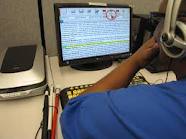
 Scan and Read Pro Scan is a software from Readingmadeeez.com that “changes printed text into understandable sound. The program helps you in reading and comprehension by highlighting each word as it's read aloud. Scan and Read Pro's voice can also be turned off if you prefer to focus on the visual input only” (Readingmadeeez.com, 2012). It costs only $149.95 (Readingmadeeez.com, 2012).
 Co:Writer 2.0 “is a word prediction software program that uses artificial intelligence to predict words based on subject-verb agreement, grammar rules, word relationships, proper names, frequency, redundancy, frequency, and user preference for individuals who struggle with writing due to physical limitation, language delay, or learning disability” (Abledata, 2012). Write:Outloud is a voice output word processor program that supports students while composing, editing, or revising. The program, like Read:Outloud, features a homonym checker and a dictionary, as well as clear, concise speech output” (Abledata, 2012). Those two are part of the SOLO package. Prices range from $99 to $325 (Abledata, 2012).
 Digital Voice Recorder for recording class lessons and verbal instruction. Digital recorders are quite cheap in comparison to software and AT devices and can be found everywhere.
  Dragon Dictation from Dragon Systems “is a voice input, voice output and voice input text editor program designed for use by individuals with spinal cord injury or upper extremity, vision, or learning disabilities. This voice recognition application allows hands-free operation of an Apple iPhone, iPod Touch or iPad. The program allows the user to speak and instantly see the text of what is said appear in the document, email message, or other input area” (Abledata, 2012). The most interesting with this product in Mary’s case is that it is for free and it can be downloaded from the Dragon Systems website (Abledata, 2012).
 SoundSmart is “a cognitive skills tutorial program and auditory training activity designed to improve listening skills, following directions, phonemic awareness, working memory, mental processing speed, and impulse control” (Abledata, 2012). It consists of the Attention Coach and the Math & Memory Coach, with the first one more important for Mary, especially for practicing listening skills. Price is provided only after contacting manufacturer..
 Other devices and software are the Activity Table, though it is rather for younger children, it still could probably be good for auditory stimulation combined with visual cues for Mary’s treating limitation (auditory) by using her functional capabilities (visual) (price info upon contacting manufacturer) and the Foundations in Speech Perception CD-ROM for auditory training and future risk of hearing loss that can be used in the classroom, home or speech therapy. Price is given upon contacting manufacturer.
  Also, Hearit SE-Model 560 is “The Hearit SE 3 Step Training Kit, model 560, is an auditory training activity designed for use with individuals with dyslexia, attention deficit disorder (ADD), attention deficit/hyperactivity disorder (ADHD), or hearing or auditory processing disabilities. This kit includes the Hearit SE, accessories for Speech Therapy/Bilingual Kit and Broadcaster (see entries) to facilitate individual, small group, or classroom work. Price is not provided, but most product of this series by Banana Speech Therapies are usually very expensive that can be used by speech therapist and be purchased by the school, though (Abledata, 2012).


